



Have you read anything by Laurie Colwin?
Laurie Colwin was an American writer based in New York City, known for both her fiction and the warm, witty essays she contributed to Gourmet magazine. Her writing about kitchen life felt personal and inviting, and it still resonates today. Those columns were collected as Home Cooking: A Writer in the Kitchen and More Home Cooking: A Writer Returns to the Kitchen, books that have become touchstones for lovers of thoughtful food writing alongside authors such as M.F.K. Fisher, Edna Lewis, and Alice B. Toklas.
Colwin died unexpectedly in 1992 at the age of 48, leaving behind a son, RF, who was eight at the time. RF Jurjevics is now an adult working as a writer, animator, and multimedia producer; he founded Big Creature Media some years ago. I contacted him last fall when Colwin’s books were released as ebooks for the first time, and he graciously agreed to take part in this interview.
I invited RF to join my Parents Who Cook series because I wanted to explore how children influence a cook’s life in the kitchen. This is the first installment in which the child speaks for themselves, and RF shared many touching and vivid memories about growing up with a mother who loved to cook. Below, he recalls childhood meals, family rituals, and the ways food shaped his childhood and his palate.
Please consider revisiting Laurie Colwin’s essays and books if you’re interested in home cooking, narrative food writing, or the pleasures of a life centered around the table.

Can you tell us a few words about the kind of child you were, and the kind of mother your mother was — both in general and with regards to food?

I was a headstrong kid who didn’t hesitate to speak my mind. A teacher once described me as the tallest in my class, and my mother jokingly called me her “Viking child,” a label that captured my imposing presence and blunt manner as a youngster.
My mother was similarly opinionated, and she liked that I had strong opinions of my own. Open dialogue was encouraged—though I could be a handful, pestering or arguing at times—but she welcomed my curiosity. She cared deeply about cooking, put great thought into what she made, and loved to have people gather around her table. She often asked guests to taste and comment; her joy was in sharing food, recipes, and conversation rather than keeping secrets about her methods.
That said, being the child who ate the “weird food” wasn’t always easy. She had firm ideas about what was good or bad—no plastic for perishables, jam made from scratch was preferable—and she rarely compromised. While many of my classmates eventually learned to love gingerbread, salmon, and asparagus at our house, I did envy the simpler treats they had: store cookies, American cheese slices, or brightly colored packaged juices. Some battles I won—fruit roll-ups of a particular kind—while others were lost. For years I was the kid with goat’s milk yogurt and smoked Gouda in my lunchbox, and later a friend admitted she was jealous: my lunches seemed exciting compared to her tuna and plain yogurt.
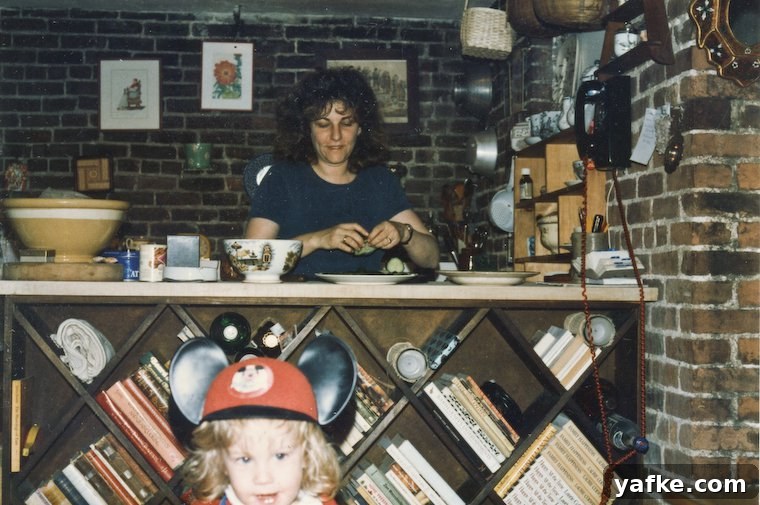
Laurie Colwin and then 2-year-old RF in 1986.