
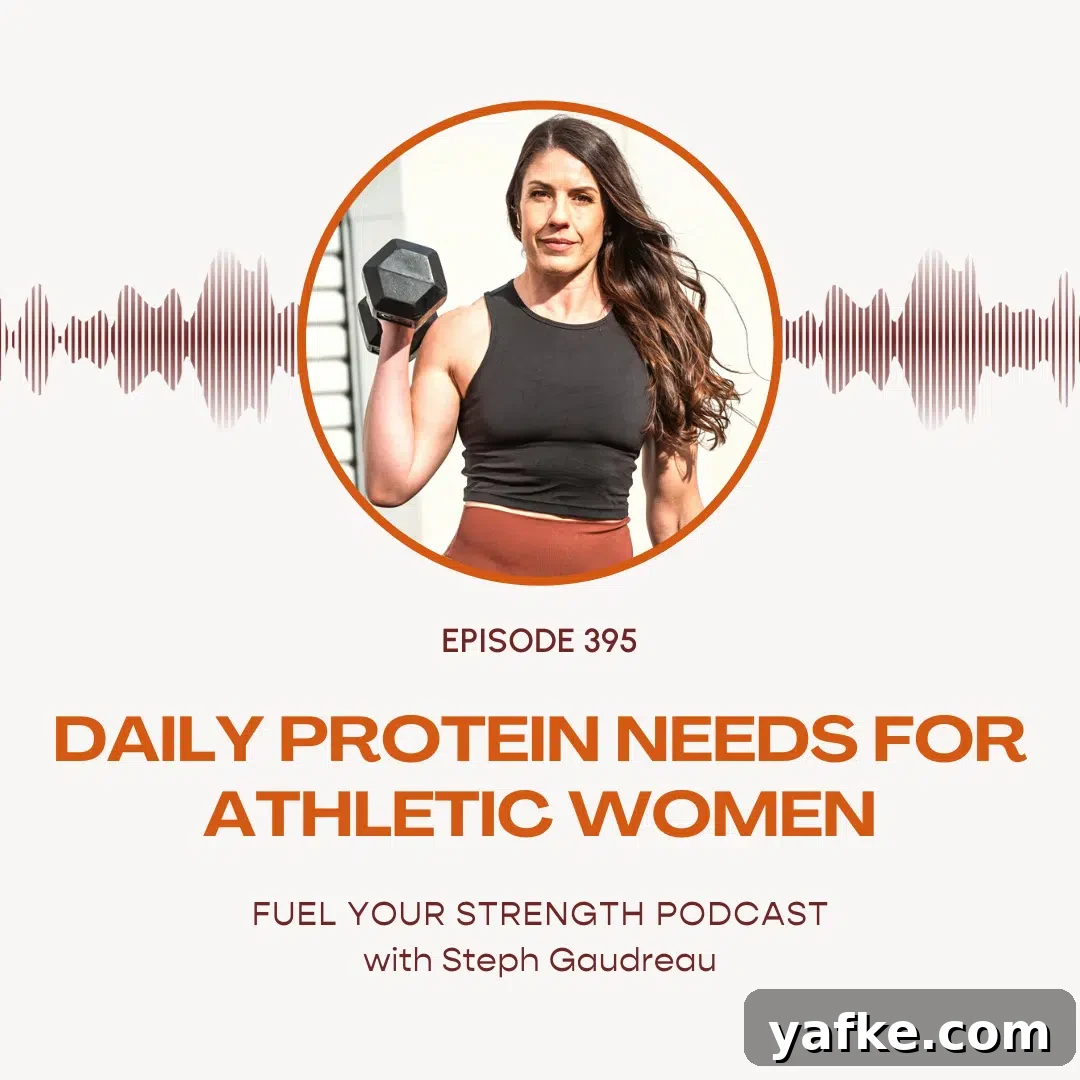
Have you ever wondered how much protein a female athlete really needs? In my experience, many women are getting less than their bodies require. Protein plays a central role in building muscle, supporting recovery, and maintaining performance. By learning a practical daily protein range and building habits around it, you can turn intention into consistent results.
Listen to this episode on your favorite podcast platform: Apple Podcasts | Spotify | Stitcher
Free week of strength workouts: Click here to get started
If You Want to Increase Your Protein Intake
- Understand why protein matters so you can build sustainable habits
- Calculate a practical protein range using body weight and training demands
- Be mindful of the specific needs of female athletes and adapt as required
Are You Eating Enough Protein?
It’s common to find active women consuming only half—or slightly more than half—of the protein needed for their training goals. Drastically cutting calories while training hard, without adequate protein, undermines progress and increases the risk of injury and stalled recovery. Using protein as a percentage of calories can be misleading; instead, calculate protein based on body weight to ensure you meet absolute needs.
Protein: The Building Macromolecule
Protein is essential for muscle growth, repair, and many structural and functional roles—muscle, skin, hair, nails, enzymes, and immune function. Because the body cannot store essential amino acids long-term like it stores glycogen or fat, regular intake of sufficient high-quality protein is necessary to maintain muscle protein synthesis, especially when training.
Build consistent systems—shopping, meal prep, and simple routines—to steadily increase protein. Small, sustainable changes work far better than abrupt, unrealistic leaps.
Key Points from the Episode
- Why understanding the rationale behind protein intake matters (4:08)
- Common nutrition struggles among clients (6:40)
- How to tell if your total protein is sufficient (12:05)
- Research supporting focused protein intake (18:37)
- Female-specific sports nutrition considerations (22:39)
Signs You Might Need More Protein
Look for persistent or disproportionate muscle soreness, slow recovery, recurring soft-tissue injuries, difficulty maintaining muscle mass, or stalled strength gains despite consistent training. These can indicate inadequate protein or overall energy intake. While other factors may contribute, protein is often a limiting factor for recovery and progress.
How Much Protein Should You Aim For?
RDA numbers (0.8 g/kg) represent a minimal intake to prevent deficiency and are generally insufficient for active people. Sports nutrition guidelines and research support higher intakes. The American College of Sports Medicine recommends 1.2–1.7 g/kg/day, and many studies suggest a useful range for athletic goals between about 1.4 and up to 3.0 g/kg/day depending on goals and circumstances.
For most female athletes aiming to build or maintain muscle and strength, a practical daily range is about 1.4–2.0 g/kg (roughly 0.7–1.0 g per pound). Where you land in that range depends on training intensity, body composition, age, and goals. If you’re in a short-term calorie deficit for fat loss, keep protein higher and continue resistance training to preserve lean mass.
Why Percentage-Based Protein Recommendations Can Miss the Mark
Expressing protein as a percentage of calories (e.g., 15–25%) can produce wildly different gram amounts depending on total calories. For example, 15% of a 1,200 kcal day equals ~45 g protein, while 15% of 2,500 kcal equals ~95 g. Because many active women underestimate their energy needs, percentage-based targets can under-deliver on absolute protein. Prioritize grams per kilogram to ensure adequate intake.
Female-Specific Considerations
Research specific to female athletes is limited, but available evidence suggests some nuance. A 2021 JISSN review noted that protein requirements may be slightly higher in the mid-luteal phase due to increased protein oxidation and endometrial tissue building. This doesn’t mean doubling protein across cycle phases, but it does support consistently meeting your target range and possibly favoring the higher end of the range at certain times.
Women over 40, or those approaching perimenopause and menopause, may benefit from aiming toward the higher end of protein recommendations due to hormonal changes that affect muscle maintenance. Resistance training combined with sufficient protein remains key.
Practical Takeaways
- Prioritize total daily protein using a body-weight–based range (1.4–2.0 g/kg for most active women).
- Focus on sustainable, incremental changes—adjust shopping, meal prep, and routines rather than expecting overnight transformation.
- If you’re training intensely or in a calorie deficit, err toward the higher end of the range and keep lifting heavy.
- Monitor recovery, soreness, and training progress to fine-tune intake.
Quotes
“If there was something I could talk about all day within sports and performance nutrition, it’s why protein is so important and how to increase your intake.”
“It takes time to translate quantities into real-life habits.”
“Female athletes striving for strength and muscle often eat far less than they need—sometimes less than half the recommended amount.”
“The worst approach is cutting calories drastically, keeping protein low, and failing to strength train.”
Featured
Apply for the Strength Nutrition Unlocked program: Apply here
Support and Resources
Offers and partnerships mentioned in the episode are available through Steph’s site and social channels. Follow Steph on social platforms to stay updated and to share questions or experiences.
Transcript Excerpt
Steph Gaudreau
How much protein do women athletes need? This episode sets out to answer that question: why protein matters, how much is appropriate for muscle-building, and how to make practical changes. For strength-focused, active women—especially those in their 40s and beyond—protein is a priority. It supports muscle synthesis, recovery, and performance when combined with an appropriate resistance-training program. Start where you are, aim for a realistic range, and make incremental changes that fit your life.
Share the Podcast
If this episode helped you, subscribe and share it with a friend, client, or teammate. For hands-on support turning these recommendations into daily habits, consider applying for Strength Nutrition Unlocked at StephGaudreau.com/apply. Stay tuned for part two of this protein series where we’ll break down meal timing, distribution, and practical meal examples.