

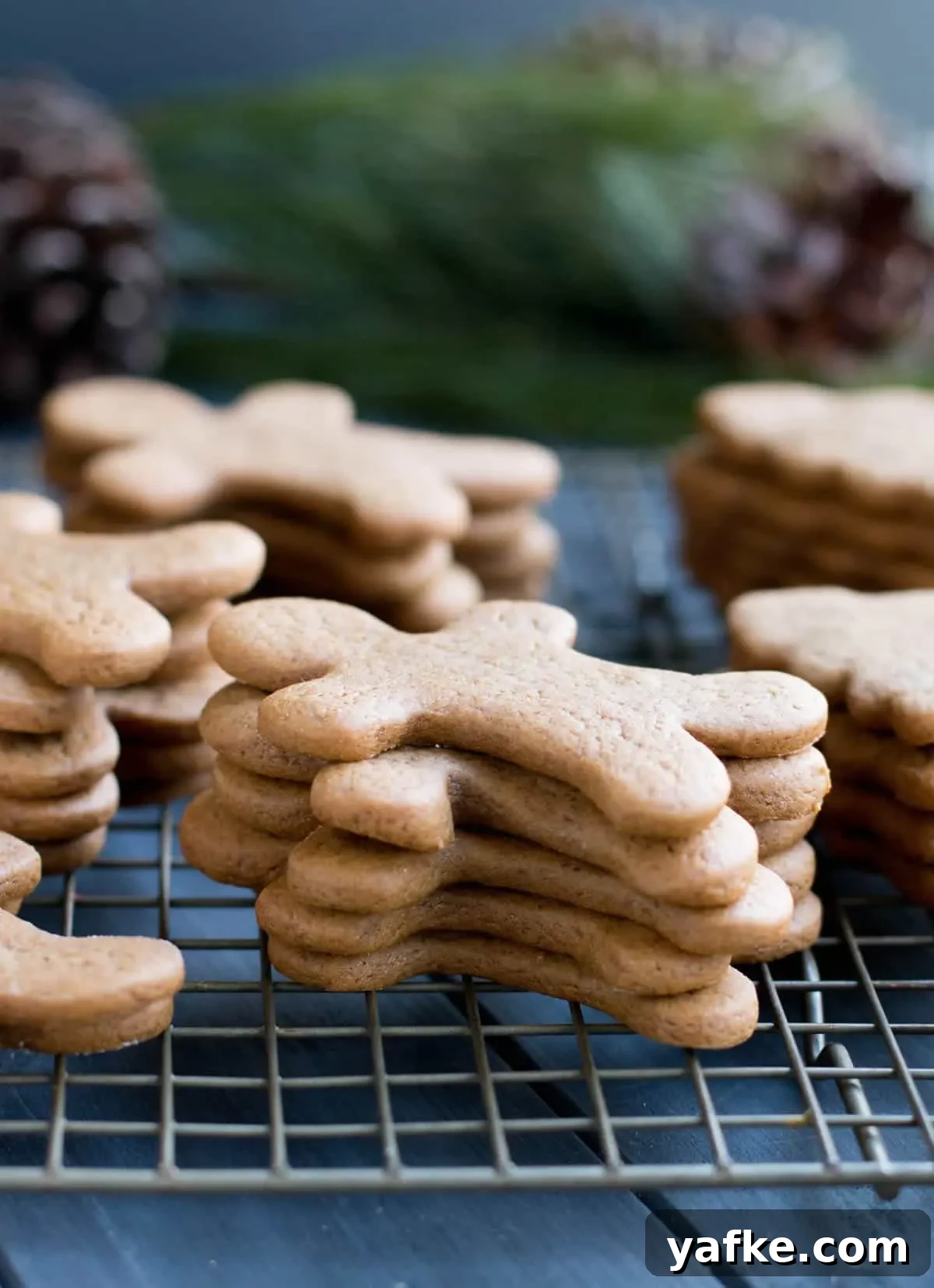
These soft gingerbread cookies converted me from a casual fan to someone who truly loves gingerbread. They are soft yet sturdy enough to decorate, with warm spice flavors and a subtle citrus icing that complements the molasses base.
I didn’t grow up obsessed with gingerbread, but once my children were old enough to decorate cookies with me, I wanted a gingerbread recipe we could all enjoy. We already had favorite cut-out cookies for Halloween and other occasions, but gingerbread was missing from our holiday cookie lineup.
My priorities were simple: a cookie that is soft and chewy rather than crisp, but firm enough to hold its shape for decorating and storing. I wanted pronounced, balanced spices so the cookies clearly read as gingerbread without being too hot for kids. I also wanted a flavor that invites a second cookie — not something you nibble out of obligation.

After testing several recipes over the years, I settled on one that matched the texture and spice balance I wanted. The dough yields cookies with a slightly crackled surface, a soft interior, and enough structure to support icing and decorations. A few key choices make the difference: high-quality spices, a careful spice ratio that emphasizes ginger, and a touch of finely ground black pepper for a subtle lift.
Another ingredient that deepens the flavor is coffee. You won’t taste coffee overtly; instead it accentuates the molasses and spices, giving the cookie a richer background note. If you prefer, use a small amount of espresso powder in the dry mix and add water to the wet ingredients — either method works.
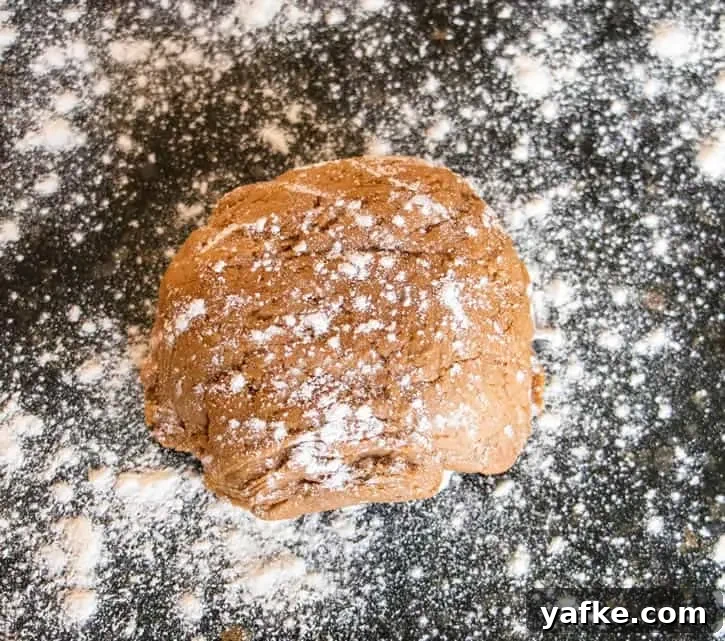
This recipe contains no egg, which contributes to the texture I was aiming for: soft but not cake-like. The dough is intentionally very soft and must be chilled for a few hours to firm up enough to roll. Chilling is a helpful step that also offers flexibility — mix the dough one day and roll and bake the next, or prepare other cookies while this dough rests in the fridge.
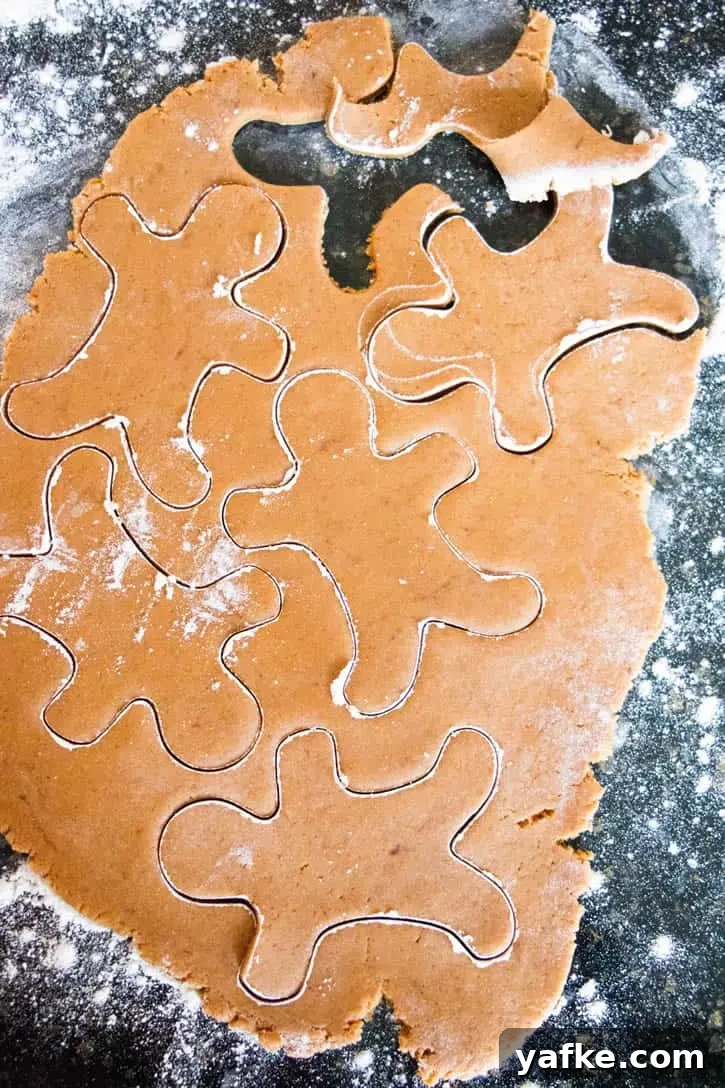
When the dough is chilled, roll it on a floured surface to just under 1/4 inch thick and use floured cookie cutters to maintain clean edges. A helpful technique is to lift and turn the dough as you roll to prevent sticking and add a little flour underneath if needed. Brush excess flour off the shapes before baking so the surface bakes evenly.
These cookies hold their shape well in the oven and bake to a soft, slightly crackled finish. For decorating, I prefer a simple orange-flavored icing made with confectioner’s sugar and orange juice. The mellow citrus note pairs nicely with the warm spices without overpowering them. If you prefer lemon juice, plain water, or a classic white icing, use what you like best.
Tips for decorating: aim for a piping consistency that’s thick enough to hold detail but pipeable; start with a small amount of liquid and add until you reach the right texture. Allow the icing to fully set before stacking or storing to prevent smudging. Store cookies in an airtight container with layers of wax paper for up to three days, or freeze them for longer storage.
This recipe has become our go-to for holiday baking. The warm, balanced spices and soft texture make these cookies both kid-friendly and appealing to adults. Whether you’re decorating with children or preparing trays to share, these soft gingerbread cookies deliver festive flavor and a pleasant chew that keeps you coming back for another.


Soft Gingerbread Cookies
44 Approx. using a 3″ cookie cutter
Ingredients
For the cookies:
- 2 1/2 cups all purpose flour
- 1/2 teaspoon baking soda
- 3/4 teaspoon salt
- 1 teaspoon ground ginger
- 1/2 teaspoon ground cinnamon
- 1/4 teaspoon ground cloves
- 1/4 teaspoon ground nutmeg, freshly ground preferred
- pinch of finely ground black pepper, optional
- 1/2 cup (1 stick) unsalted butter, room temperature
- 1/2 cup sugar
- 1/2 cup molasses
- 1/4 cup brewed coffee, room temperature (or 1/4 teaspoon espresso powder and 1/4 cup water)
- 1 teaspoon vanilla extract
For the icing:
- 2 cups confectioner’s sugar
- 2-3 tablespoons orange juice (or lemon juice or water)
Instructions
- Make cookies. In a medium bowl, whisk together the dry ingredients from the flour through the black pepper. If using espresso powder instead of brewed coffee, add the espresso powder to the dry ingredients.
- In a large bowl, cream the butter and sugar with an electric mixer until smooth. Beat in the molasses, coffee (or water if using espresso powder) and vanilla.
- Gradually add the flour and spice mixture and mix until smooth. The dough will be very soft. Divide into three pieces, shape into balls and wrap each in plastic wrap. Chill for at least 2 hours until firm.
- Preheat oven to 375°F (190°C).
- Working with one ball of dough at a time (leave the others refrigerated), roll dough on a floured surface to just under 1/4″ thick. Use floured cookie cutters to cut shapes. A 3″ cutter works well.
- Place cookies on parchment-lined baking sheets, brush off excess flour and bake for 9–12 minutes or until edges are firmly set. For convection ovens, reduce temperature and adjust time as needed.
- Allow cookies to cool on the baking sheet for about 5 minutes, then transfer to a wire rack to finish cooling.
- Make icing. Whisk confectioner’s sugar with enough orange juice to reach a thick but pipeable consistency. Start with a small amount of liquid and add until the icing is smooth and holds its shape when piped. Use a small round piping tip or a sturdy plastic bag with a small corner cut off.
- Decorate cookies, let the icing fully set, then store in an airtight container layered with wax paper for up to 3 days or freeze for up to 2 months.
Notes
*If using a convection oven, reduce the temperature and shorten the bake time; for example, 350°F and 7–8 minutes may work depending on your oven.
*To ensure clean cutouts, dip cookie cutters in flour before each cut and lift and turn the dough while rolling to prevent sticking. Add a little flour under the dough as you turn if necessary.
*For crisper cookies, roll the dough thinner (about 1/8″) and bake as directed; they should become crisp without becoming hard.
*You can flavor the icing with orange juice, lemon juice, or leave it neutral by using water. Avoid adding strong flavorings that change the appearance if you want bright white icing.