
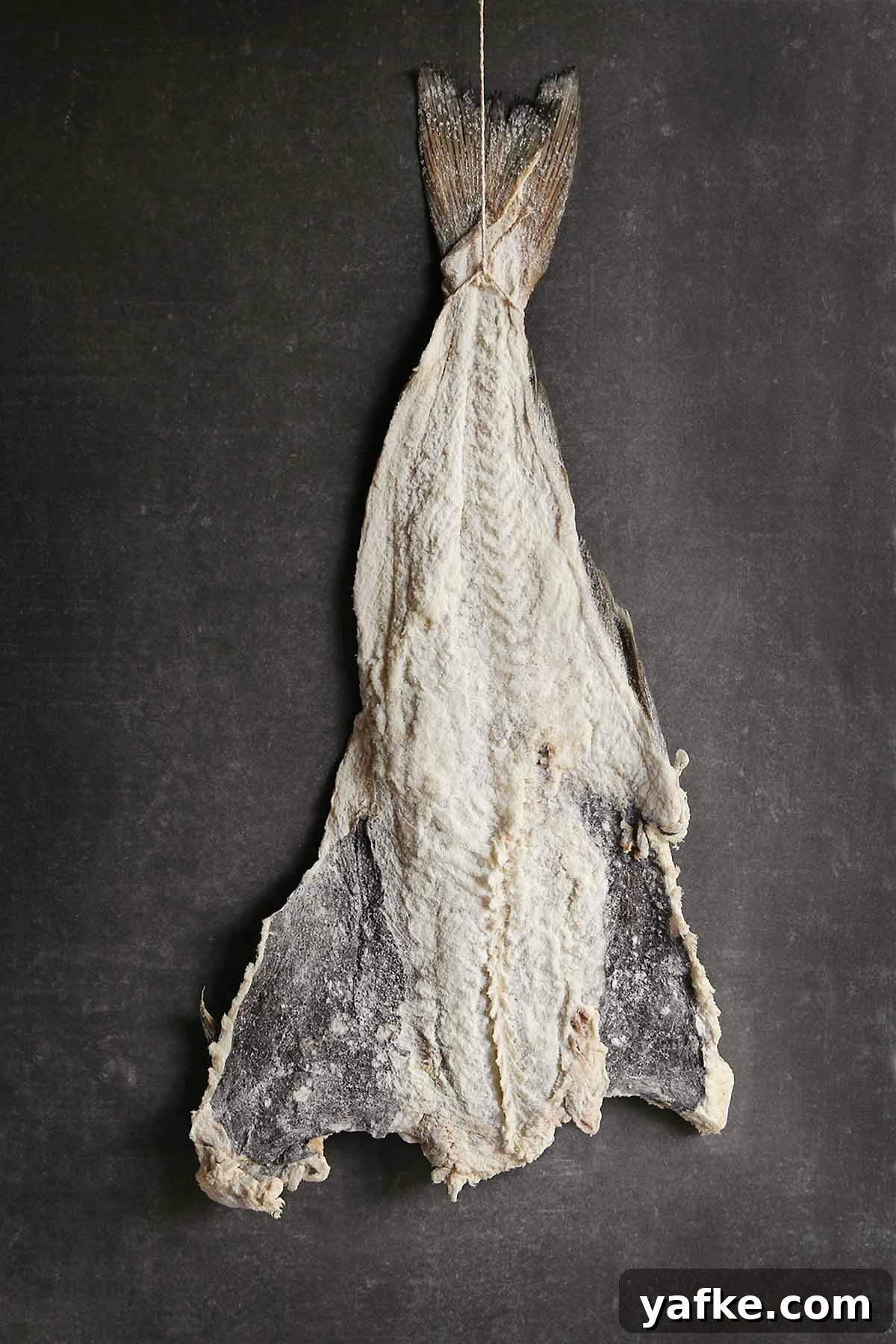
Salt cod (bacalhau in Portuguese, baccalà in Italian, and bacalao in Spanish) is a cherished ingredient across many cuisines, prized for its savory depth, long shelf life, and unique texture. If you’ve never worked with it before, this guide will help you buy, soak, and cook salt cod with confidence.
TL;DR (Quick-Answer Box)
- Salt cod is an iconic, shelf-stable ingredient—buy firm, thick pieces from specialty markets and plan to soak them before cooking.
- Soak salt cod for 12–48 hours in the refrigerator, changing the water regularly to remove excess salt.
- After soaking, simmer the cod in water or milk until it flakes, then remove skin and bones and use in your recipe.
- Choose the cut—loins, center cuts, tail pieces, or migas—based on the dish you’re making; each cut has distinct texture and uses.
- The characteristic taste and texture of salt cod come from the traditional salting and drying process, which concentrates flavor and changes the flesh’s structure.
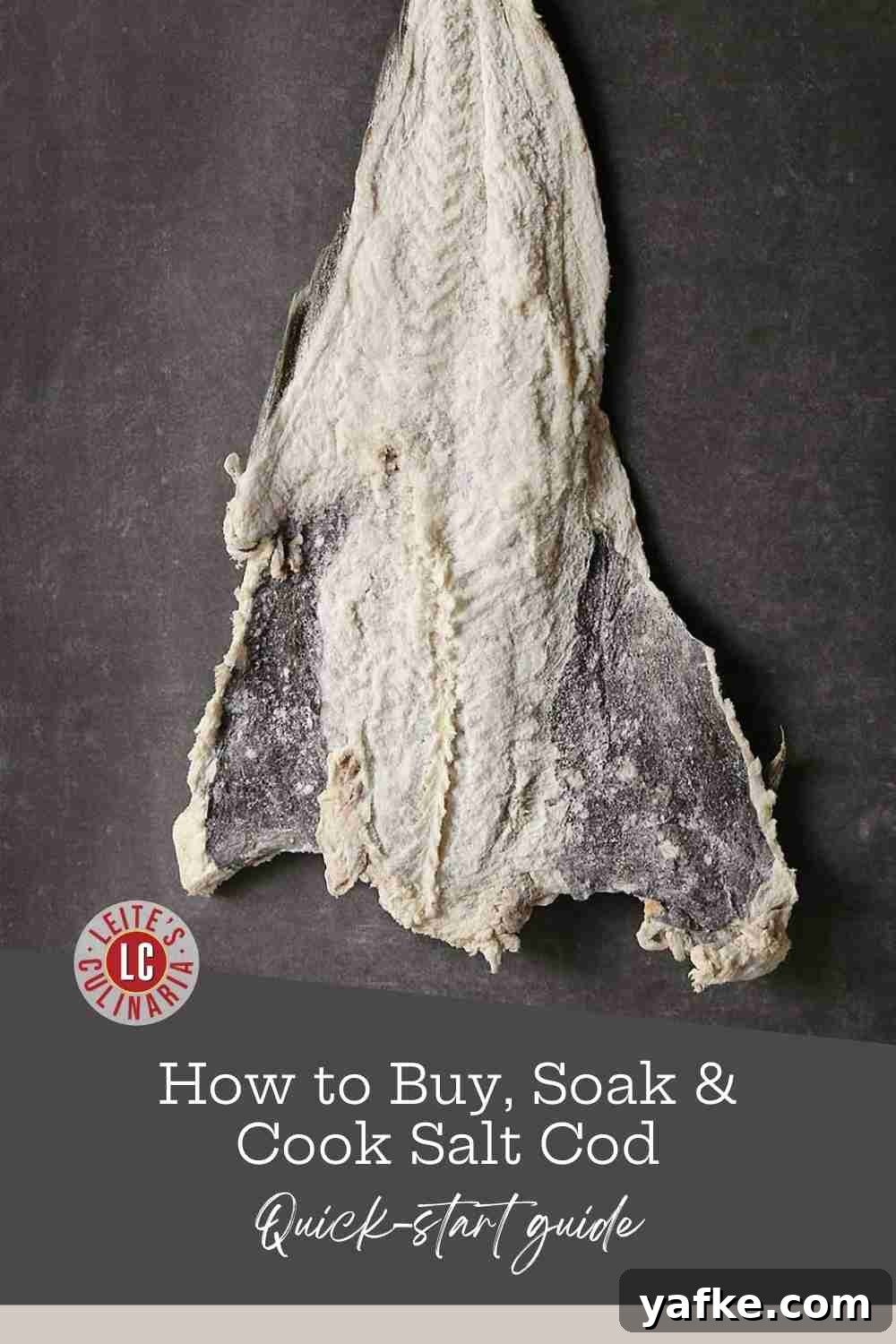
How did salted cod become so popular?
Salted and dried cod has a long history. Northern European fish stocks, exploited by seafaring peoples, made air-drying and salting practical preservation methods long before refrigeration. The Vikings were early adopters of drying cod, and later Basque fishermen developed widespread salting techniques that extended the fish’s shelf life even further. Those preservation advances met strong demand: for centuries, religious fasting and meatless days increased the need for preserved fish, helping salt cod travel and become a staple in many coastal cuisines. Portuguese sailors and traders then helped spread salt cod across Europe and to former colonies, cementing its role in numerous traditional dishes.
Modern salt cod differs from the very dry, heavily salted planks of the past. Many commercial products now arrive mildly salted or partially rehydrated, which reduces soaking time. Yet the essential appeal remains: once properly desalted and cooked, salt cod flakes beautifully and has a slightly firm, satisfying bite.
How to buy salt cod
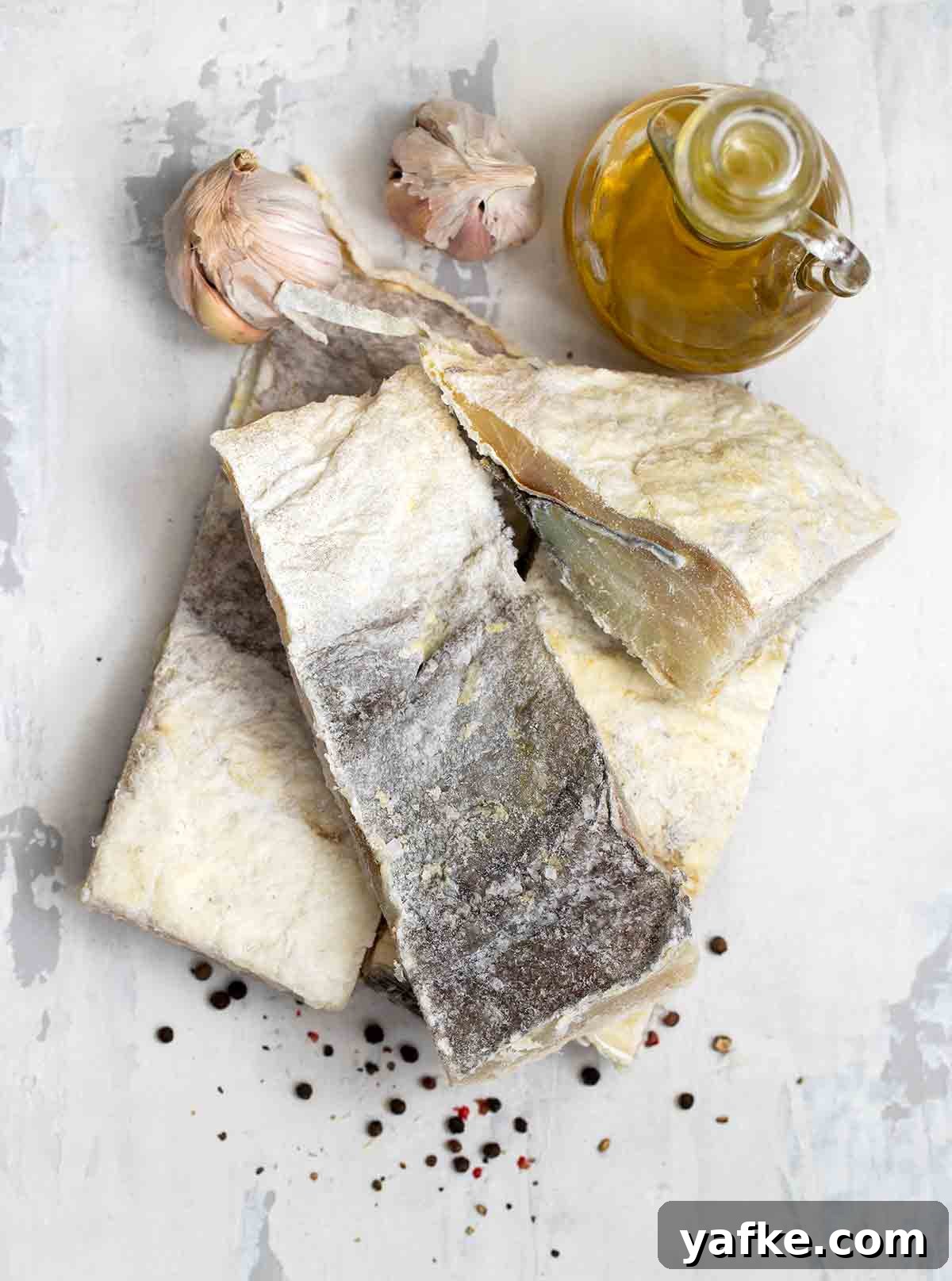
When a recipe calls for salt cod or bacalhau, seek out quality pieces at Portuguese, Italian, Spanish, Greek, or Latin markets and reputable seafood shops. Look for thick, white flesh with a fresh aroma and moderate flexibility. Avoid yellowed or brittle fillets, which can indicate age or rancidity.
Thicker pieces usually produce the best texture and presentation. If possible, buy loins or center cuts for dishes that showcase the fish; smaller pieces or migas are useful for fritters, salads, and mixed preparations.
Different cuts of bacalhau
- Loins (lombos / lomos): The thickest, most prized portion, ideal for grilling, baking, or serving whole due to its meaty texture.
- Center cuts (postas): Mid-section steaks that hold up in stews, casseroles, or when flaked into mixed dishes.
- Tail pieces: Thinner and less meaty, these are good for quick frying, fritters, or adding to soups when very dry.
- Migas (crumbs/pieces): Smaller, broken pieces sold in packs—economical and perfect for croquettes, fritters, or mixed salads.
- Whole split fish: The entire gutted and salted fish split open; sold in bulk and requiring longer preparation and soaking—often used by restaurants.
Other considerations
- Bone-in vs. boneless: Bone-in cuts are traditional and generally less expensive; boneless fillets are convenient and faster to prepare.
- Skin-on vs. skinless: Skin-on pieces keep their shape during cooking; skinless saves time when you need ready-to-use flesh.
- Quality: Seek thick, white segments with a slight give. Excessively yellow or brittle pieces can mean poor quality.
How—and how long—to soak salt cod
Soaking time depends on the piece’s size, thickness, and how heavily it was salted. Follow these practical steps:
- Rinse the salt cod under cold running water to remove surface salt and any loose flakes.
- Place the cod in a large bowl or shallow container and cover with cold water by a couple of inches.
- Cover the container tightly and refrigerate. Change the water every 6 to 12 hours and taste a small piece after 12–24 hours. Continue soaking until the fish reaches your desired salt level—typically 12 to 48 hours depending on thickness and saltiness.
Tip: You can always add more salt to a finished dish, but you cannot remove salt from already-cooked food. Taste during soaking to judge readiness.

How to cook salt cod
- Place the soaked and drained cod in a saucepan and add enough water to cover. For a milder, creamier flavor, you can use milk or a mixture of water and milk.
- Bring to a gentle boil, then reduce the heat and simmer until the flesh flakes easily with a fork—usually 15–20 minutes for most fillets, longer for very thick loins.
- Drain and let cool enough to handle. Remove any remaining skin, bones, and spongy ends. Flake or slice the fish as your recipe requires and proceed with your dish.
Tip: Fresh cod is not an interchangeable substitute. Salt cod’s preserved flavor and firmer texture are unique and contribute character that fresh cod cannot replicate.
Sources
Kurlansky, M. (1998). Cod: A Biography of the Fish That Changed the World. Penguin Books.
Leite, D. (2009). The New Portuguese Table: Exciting Flavors from Europe’s Western Coast. Clarkson Potter.
McGee, H. (2004). On Food and Cooking: The Science and Lore of the Kitchen (Updated ed.). Scribner.
Norwegian Seafood Council. Reports on exports and industry trends.