
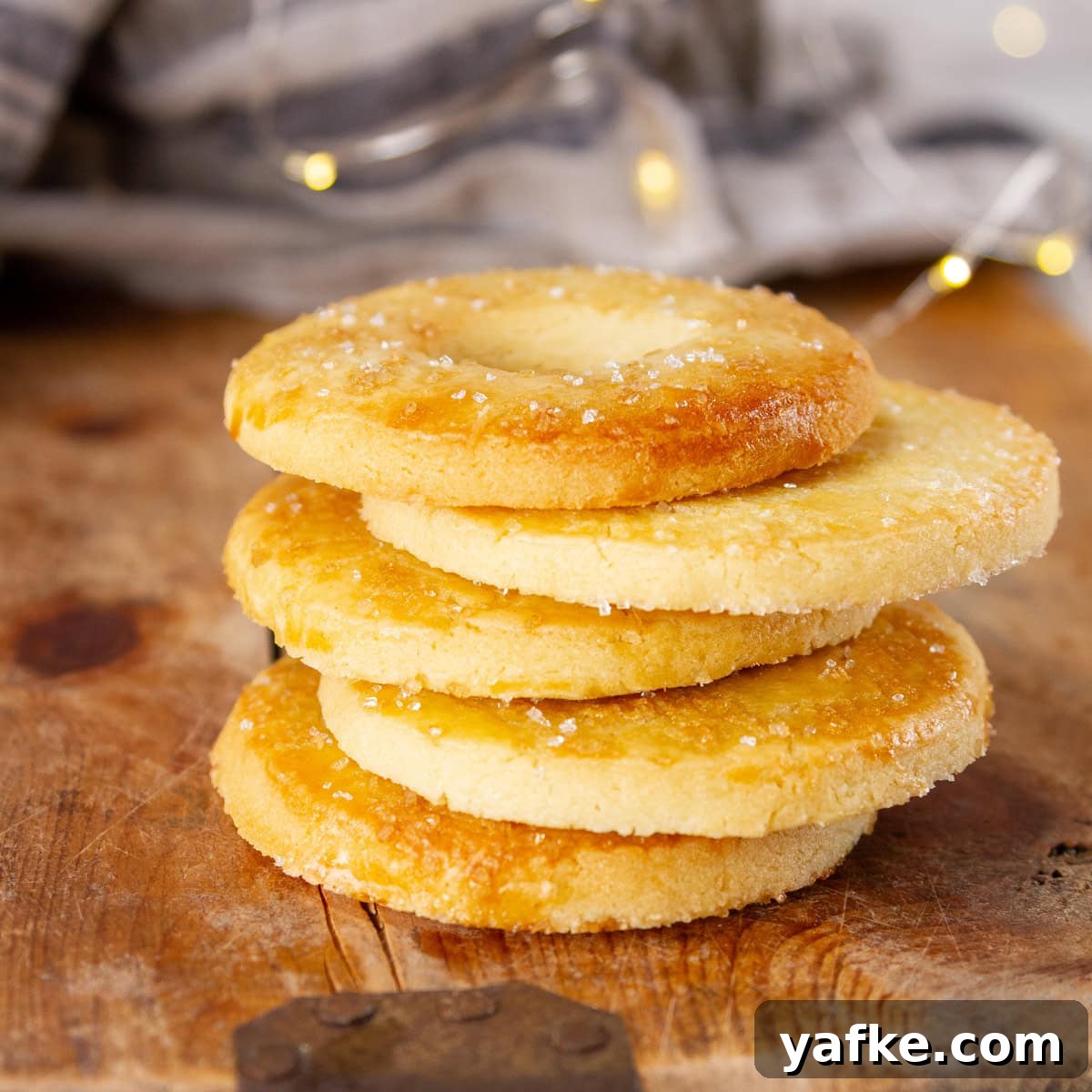
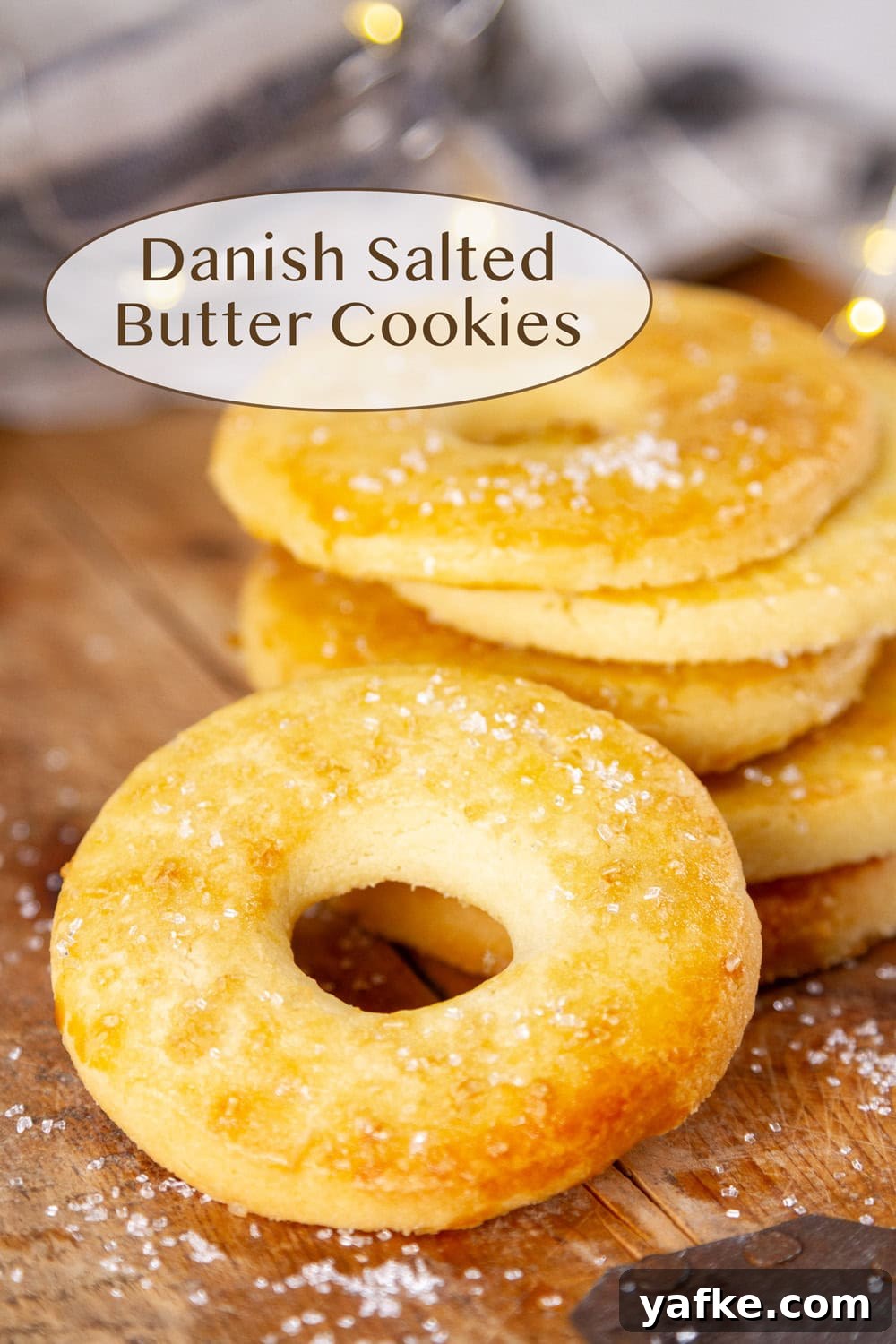
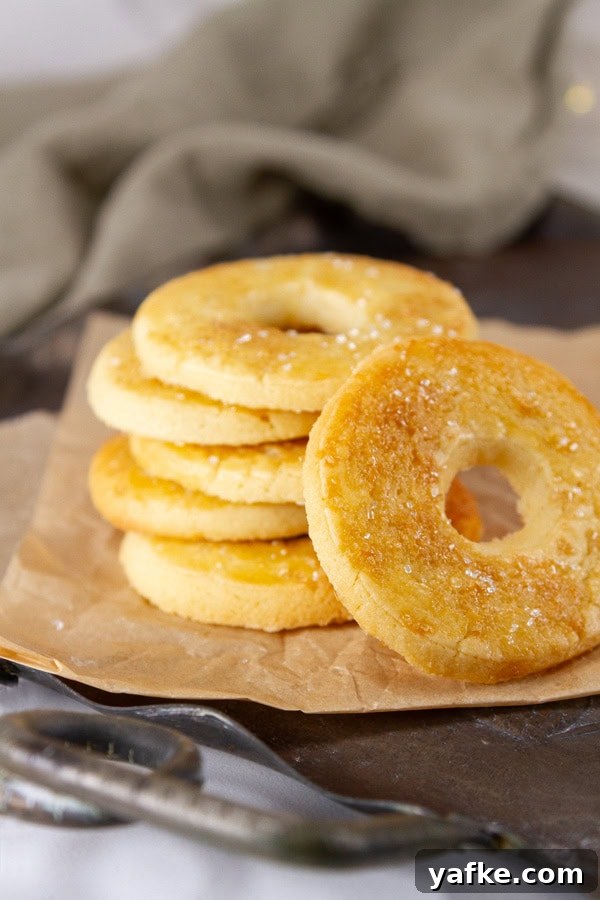
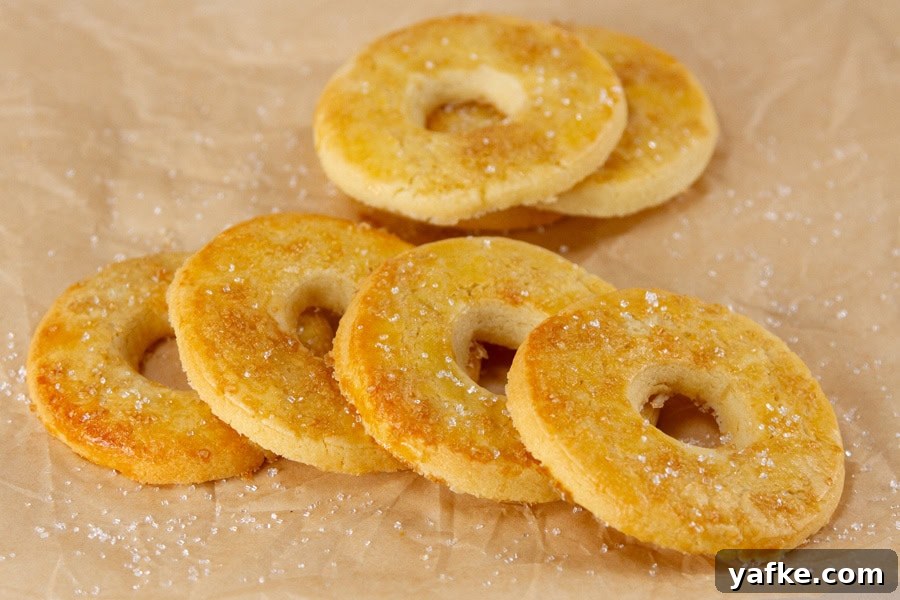
These Danish Salted Butter Cookies are light, crisp, and delightfully delicate—much like the familiar cookies from the iconic blue tin. They have a melt-in-your-mouth texture and a rich buttery flavor. With just a handful of pantry ingredients, this straightforward recipe delivers bakery-quality cookies at home.
Made with simple ingredients and easy steps, these cookies are perfect for the holidays, gift tins, or any time you want a classic buttery cookie.
We appreciate your support
If you have any questions about this recipe, please leave a comment. I read all comments and try to reply as soon as I can. I welcome bakers of every skill level and am happy to help if you run into any issues or need clarification.
Origin of these butter cookies
These butter cookies trace their origins to Denmark and gained international popularity in the 20th century through well-known brands. The dough is made primarily from butter, flour, and sugar and is closely related to shortbread. The main difference is the ratio of ingredients: shortbread typically has a higher butter-to-flour ratio and less sugar, producing a denser, crumblier cookie. Danish butter cookies use a slightly lower butter-to-flour ratio and more sugar—and sometimes an egg—yielding a lighter, crisper cookie that melts on the tongue.
How to make Danish Salted Butter Cookies
These cookies rely on high-quality butter and a touch of vanilla for flavor. Salt in the dough enhances the buttery notes. Below are clear steps and helpful tips; follow the ingredient list and instructions for consistent results.
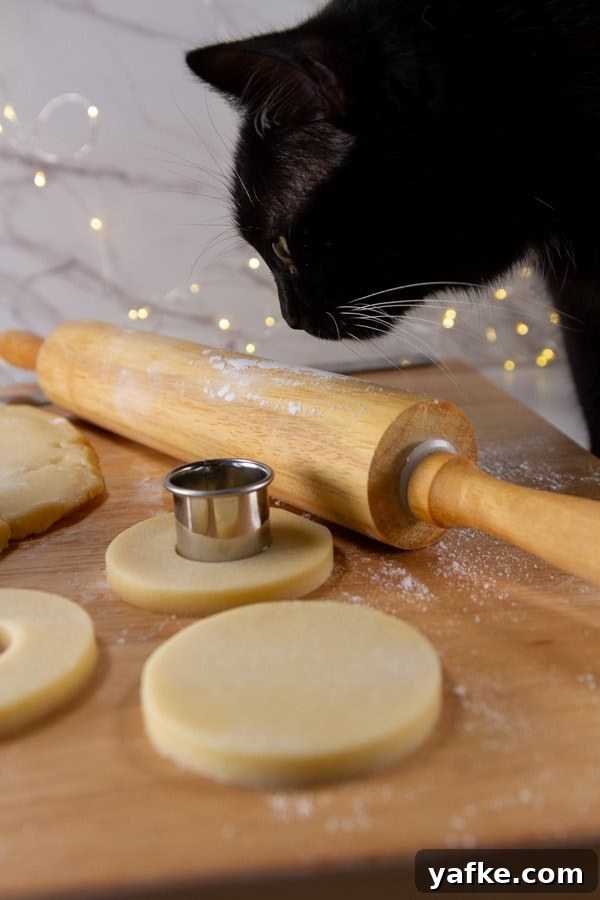
These are cut-out cookies, made with two round cutters: a larger round for the cookie and a smaller round for the center hole. If you don’t have fluted or round cookie cutters, use the rim of a glass. Alternatively, roll the dough into a log, chill, and slice into rounds.
Ingredient tips
Because the ingredient list is short, use good-quality items: real butter (salted in this recipe), fresh eggs, and pure vanilla extract. You can substitute vanilla bean paste for extract if you want visible vanilla flecks. Measure flour properly by lightly scooping and leveling, or weigh it for precision.
Mix the dough
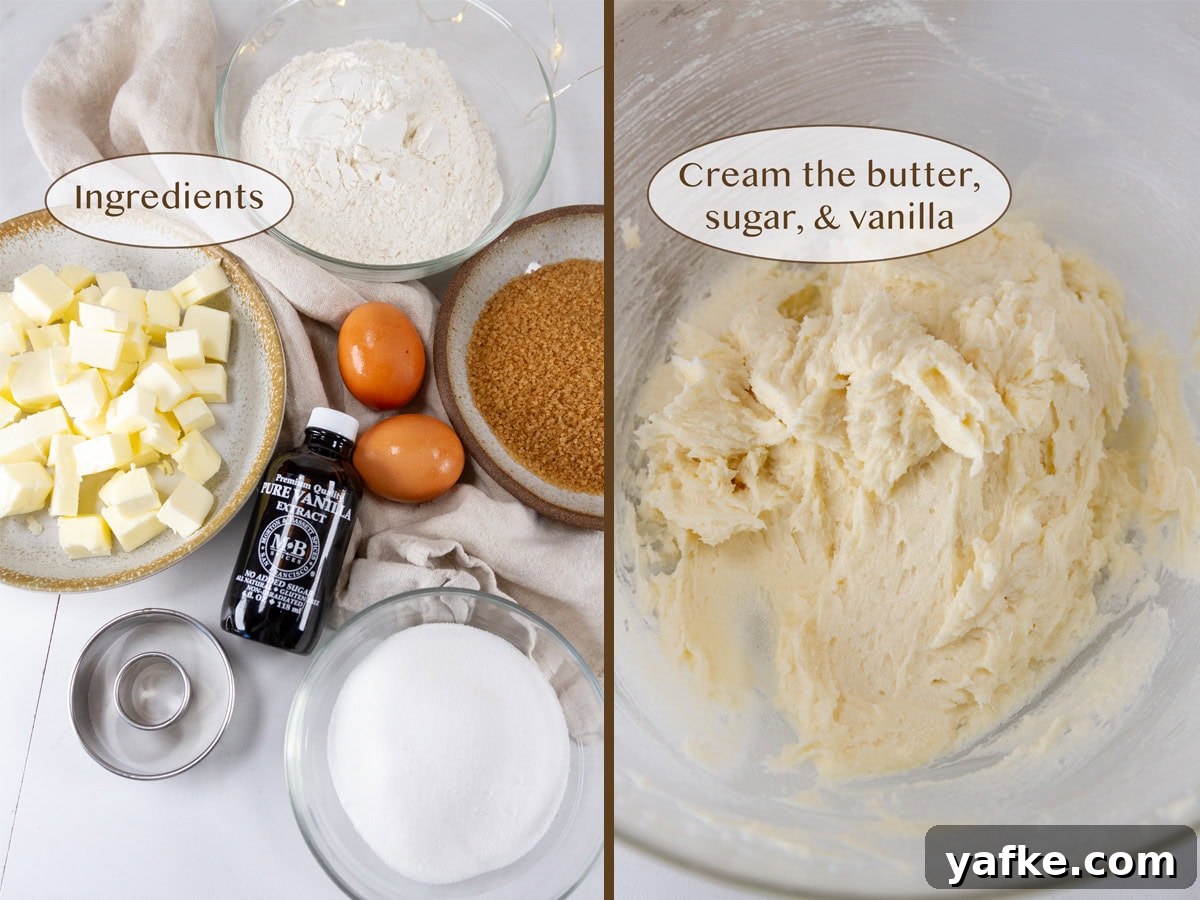
Combine the chilled salted butter, granulated sugar, and vanilla in a large bowl. Using an electric mixer on high speed, beat until very light and fluffy, about 5 to 8 minutes. Thorough creaming yields lighter cookies rather than dense ones. For this recipe, an electric mixer is helpful for achieving the ideal texture.
Beat in one of the eggs, then reduce the mixer speed to low and gradually mix in the flour until the dough comes together.
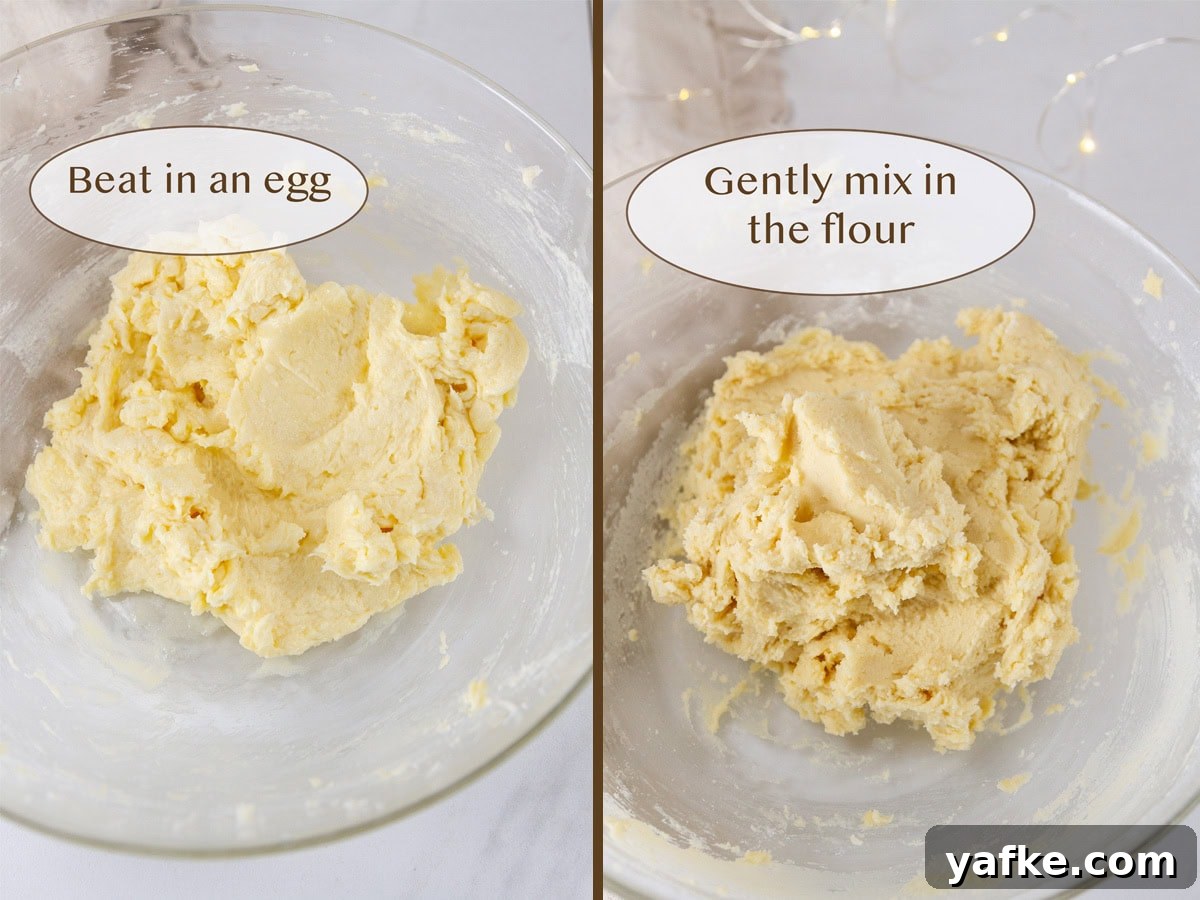
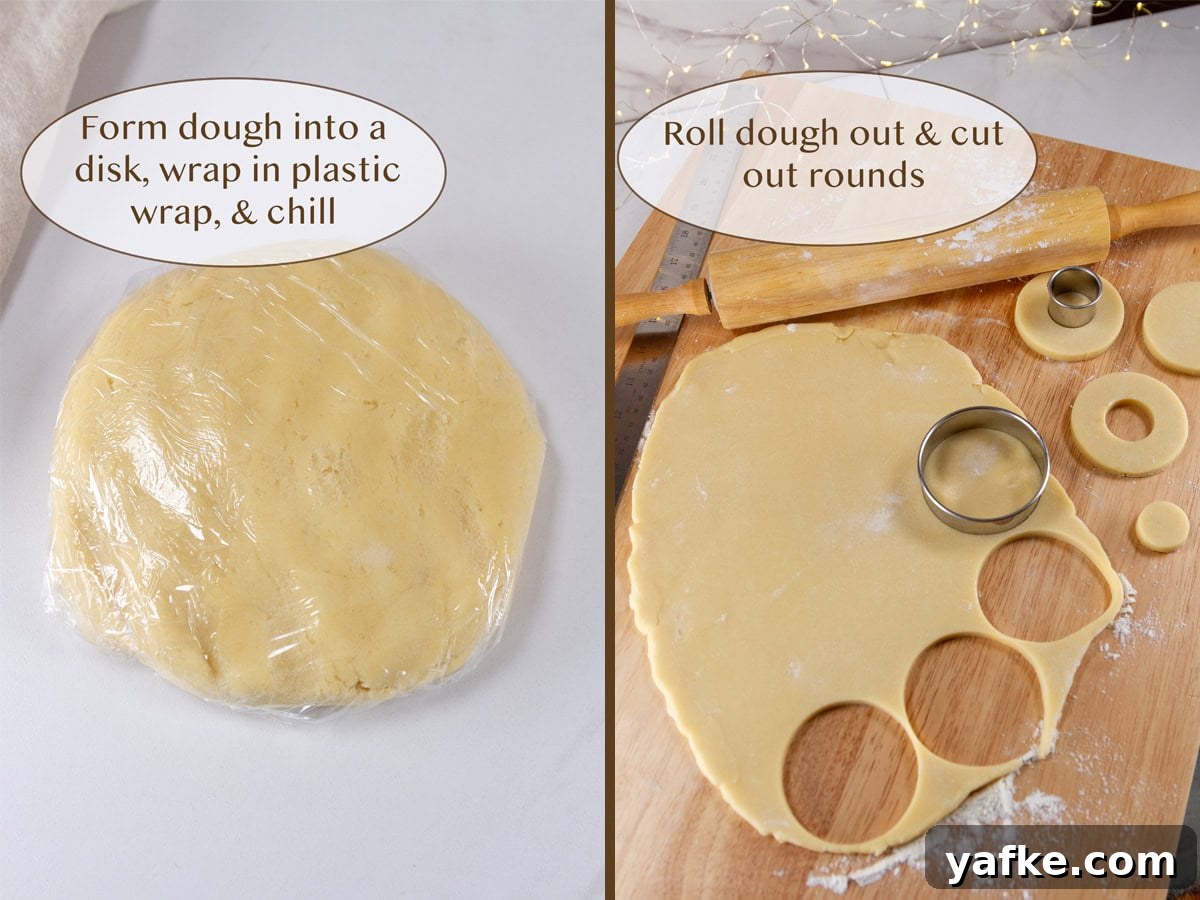
Form the dough into a disk, wrap it tightly in plastic, and chill for about 2 hours or overnight until firm. Chilling is important—it keeps the cookies from spreading and improves flavor and texture.
When ready, preheat the oven to 350°F. Let the dough sit at room temperature for 15–20 minutes to soften slightly, then roll it out on a lightly floured surface to about 3/8-inch thickness.
Cut out and bake
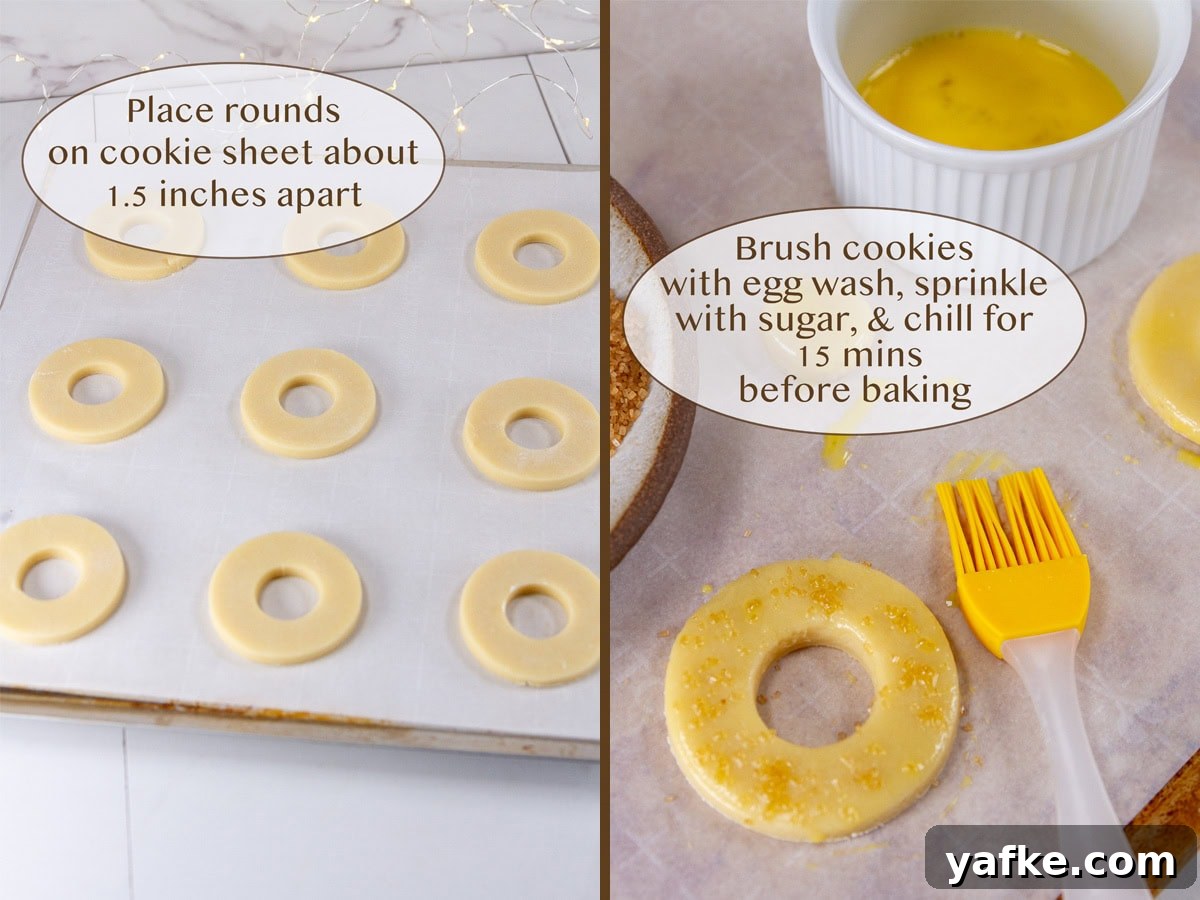
Cut rounds with a large cutter (about 3 inches) and cut centers with a smaller cutter (about 1½ inches). Place the cut shapes on a baking sheet lined with parchment paper or a silicone mat, spacing cookies 1½ inches apart. Gather scraps, re-chill, and re-roll as needed.
Beat the remaining egg with 1 teaspoon of water and brush the cookies lightly with the egg wash. Sprinkle with sanding sugar or turbinado sugar if desired. Chill the prepared cookies for at least 15 minutes before baking—this minimizes spread and helps the cookies keep their shape.
Garnish suggestions
A sprinkle of sanding sugar or turbinado sugar adds a pleasant crunch and attractive finish. For a refined salted contrast, a very light sprinkle of flaky salt such as fleur de sel is excellent. Use sparingly so the salt doesn’t overpower the cookie.
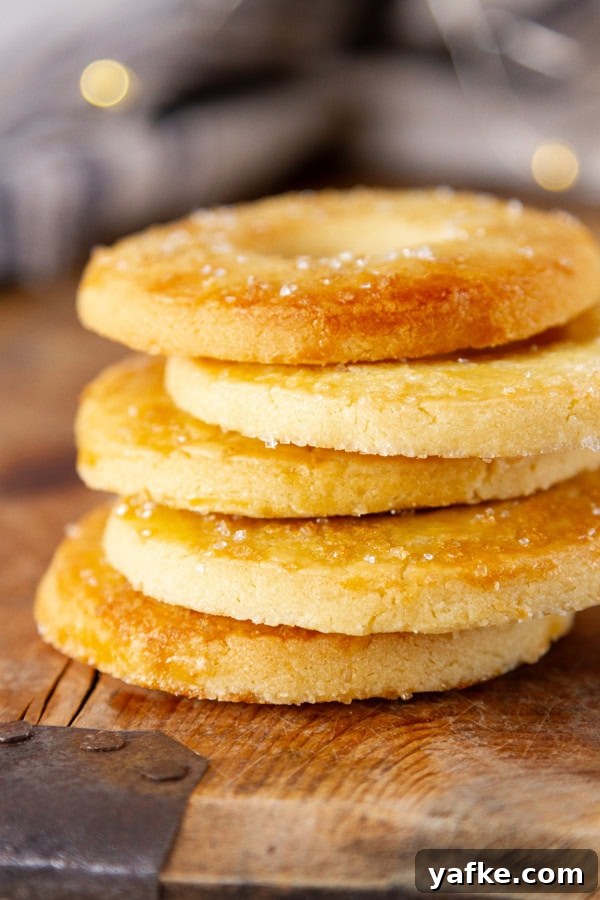
Bake, rotating pans halfway through, until the edges just turn golden, about 10–15 minutes. Avoid overbaking—the cookies should be pale with golden edges. Transfer the baking sheets to wire racks and let the cookies set on the sheets for a few minutes before moving them to the racks to cool completely.
Continue making cookies
Repeat the rolling, cutting, and chilling process with remaining dough and scraps. Allow cookies to cool completely before storing.
Troubleshooting
If cookies spread and lose their shape, consider these causes:
- Not enough flour to support the butter—measure flour properly or add an extra 2–3 tablespoons if dough seems too soft.
- Dough too warm when placed on the baking sheet—chill dough 15–30 minutes before baking and avoid warm pans.
- Overmixing—this can warm the butter and make the dough too soft; refrigerate dough well before cutting.
- Incorrect oven temperature—use an oven thermometer to confirm accurate preheating and avoid hot spots.
Storage
The dough can be made and refrigerated up to 2 days in advance, wrapped tightly in plastic. Frozen dough will keep up to 1 month. Baked cookies store in an airtight container at room temperature for up to one week. For longer storage, freeze baked cookies in a freezer-safe airtight container for up to three months; thaw at room temperature about an hour before serving.
These cookies make lovely gifts. Line a tin with paper liners and stack a few cookies in each section for an attractive presentation.
Recipe
Danish Salted Butter Cookies
Light, crisp, and buttery cookies with a melt-in-your-mouth texture.
Prep Time: 40 mins • Cook Time: 10 mins • Resting Time: 2 hrs 30 mins • Total Time: 3 hrs 20 mins
Servings: 20 cookies • Calories: 182 kcal (per cookie)
Equipment
- 3-inch diameter and 1½-inch diameter cookie cutters (or a rim of a glass)
- Baking sheet lined with parchment paper or a silicone mat
Ingredients
- 1 cup chilled salted butter, cut into pieces (2 sticks)
- 3/4 cup granulated sugar
- 1 teaspoon vanilla extract
- 2 large eggs, divided use
- 2 cups all-purpose flour, plus more for dusting
- 1/2 cup sanding or turbinado sugar for garnish (optional)
Instructions
- Combine the chilled salted butter, granulated sugar, and vanilla in a large bowl. Beat on high speed with an electric mixer until very light and fluffy, about 5–8 minutes.
- Beat in one egg, then reduce speed to low and gradually add the flour until the dough comes together.
- Form the dough into a disk, wrap in plastic, and chill for about 2 hours or overnight until firm.
- Preheat the oven to 350°F. Let the dough sit at room temperature 15–20 minutes to soften slightly. Roll out on a lightly floured surface to about 3/8-inch thickness.
- Cut rounds with the large cutter (about 3-inch diameter) and cut centers with the smaller cutter (about 1½-inch diameter). Place cut cookies on prepared baking sheets 1½ inches apart. Pat scraps, re-chill, and re-roll as needed.
- Beat the remaining egg with 1 teaspoon water and brush the cookies lightly with the egg wash. Sprinkle with sanding sugar or turbinado sugar if desired. Chill the prepared cookies at least 15 minutes before baking.
- Bake, rotating pans halfway through, until edges are just golden, about 10–15 minutes. Transfer pans to wire racks and let cookies set, then cool completely on the racks.
- Repeat with remaining dough and chilled scraps.
Notes
- Cookies can be finished with sanding sugar, turbinado sugar, or a light sprinkle of flaky sea salt for a salted finish.
- Dough can be made and refrigerated up to 2 days or frozen for up to 1 month.
- Baked cookies store in an airtight container at room temperature for up to 1 week, or frozen for up to 3 months.
Nutrition (estimate per cookie)
Calories: 182 kcal • Carbohydrates: 22 g • Protein: 2 g • Fat: 10 g • Saturated Fat: 6 g • Sugar: 13 g • Sodium: 80 mg
Stay in touch
If you try this recipe, please come back and leave a comment letting us know how it went. Share a photo if you like—I love seeing your results.