
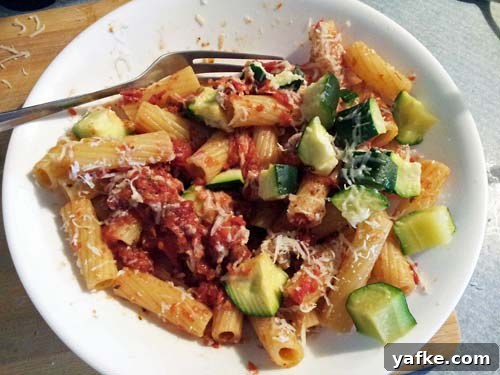
One of the best parts of having a home garden is growing tomatoes, and one of the best ways to enjoy that harvest year-round is to preserve them as tomato puree. I’m too lazy to can whole tomatoes, but I happily put up jars and jars of fresh tomato puree to use later. (See how to can your own puree here.) I recently used the last of 2012’s tomato puree to make what might be the best marinara sauce I’ve ever tasted — bright, fresh tomato flavor balanced with savory herbs, vegetables, olives and capers. We served it with rigatoni, steamed zucchini, and freshly grated Romano cheese. I forgot to take a photo before digging in, so apologies for the lack of a picture!
Simple Homemade Marinara from Tomato Puree
This marinara is straightforward, pantry-friendly, and ideal when you have jars of homemade tomato puree on hand. The sauce highlights fresh tomato flavor and avoids heavy cooking that can make tomatoes taste cooked or processed. It pairs well with pasta, roasted vegetables, sandwiches, or as a base for baked dishes.
Ingredients
- 2 Tbsp olive oil
- 1 large leek, chopped
- 1 clove garlic, minced
- 1/4 cup chopped Kalamata olives
- 3/4 cup canned artichoke hearts, chopped
- 3 quarts (or equivalent in 28 oz. cans) tomato puree
- 3 Tbsp capers
- 1 Tbsp dried basil
- 1 tsp dried marjoram
- 1 Tbsp brown sugar
- 2 Tbsp red wine vinegar
- Aleppo red pepper and sea salt to taste
- 1/2 cup chopped dried tomatoes (or use homemade dried cherry tomatoes — see drying method here.)
Instructions
1. Heat the olive oil in a large, heavy-bottomed pot over medium heat.
2. Add the chopped leek and minced garlic; sauté gently until softened but not browned. The goal is to release their sweetness without adding color.
3. Add the chopped Kalamata olives, chopped artichoke hearts, tomato puree, capers, dried basil, dried marjoram, brown sugar, and red wine vinegar. Stir to combine thoroughly.
4. Add the Aleppo red pepper and sea salt to taste, then stir in the chopped dried tomatoes. Reduce the heat to low and let the sauce simmer gently for about one hour, stirring occasionally so nothing sticks to the pot.
5. Keep an eye on the heat. Avoid overcooking — prolonged high heat can make the tomatoes lose their bright, fresh flavor and become bitter or overly processed.
To Serve
Cook your pasta according to package directions. Drain and toss the pasta with enough sauce to coat each piece. Allow the sauced pasta to sit a few minutes so it can absorb the flavors. Serve with additional sauce on the side, a bowl of steamed zucchini or broccoli, and freshly shredded Romano or Parmesan cheese.
Tips & Notes
– Use good-quality tomato puree for the best results. If you preserve your tomatoes at home, the flavor will be noticeably fresher than many store-bought alternatives.
– Brown sugar and red wine vinegar help balance acidity while preserving brightness. Adjust quantities to taste depending on how sweet or tangy your puree is.
– Aleppo pepper adds a mild heat with fruity undertones; substitute with crushed red pepper flakes if you prefer a different spice profile.
– This sauce works well as a base for additions like sautéed mushrooms, roasted peppers, or cooked sausage if you want to vary it. Keep additions modest so the fresh tomato flavor remains the star.
– If you plan to freeze or jar extra sauce, cool it completely before transferring to containers. Reheat gently to preserve that fresh tomato character.
This marinara is an excellent way to enjoy your garden tomatoes all year. With a few pantry staples and a jar of puree, you can make a bright, versatile sauce that complements pasta, vegetables, and more.