
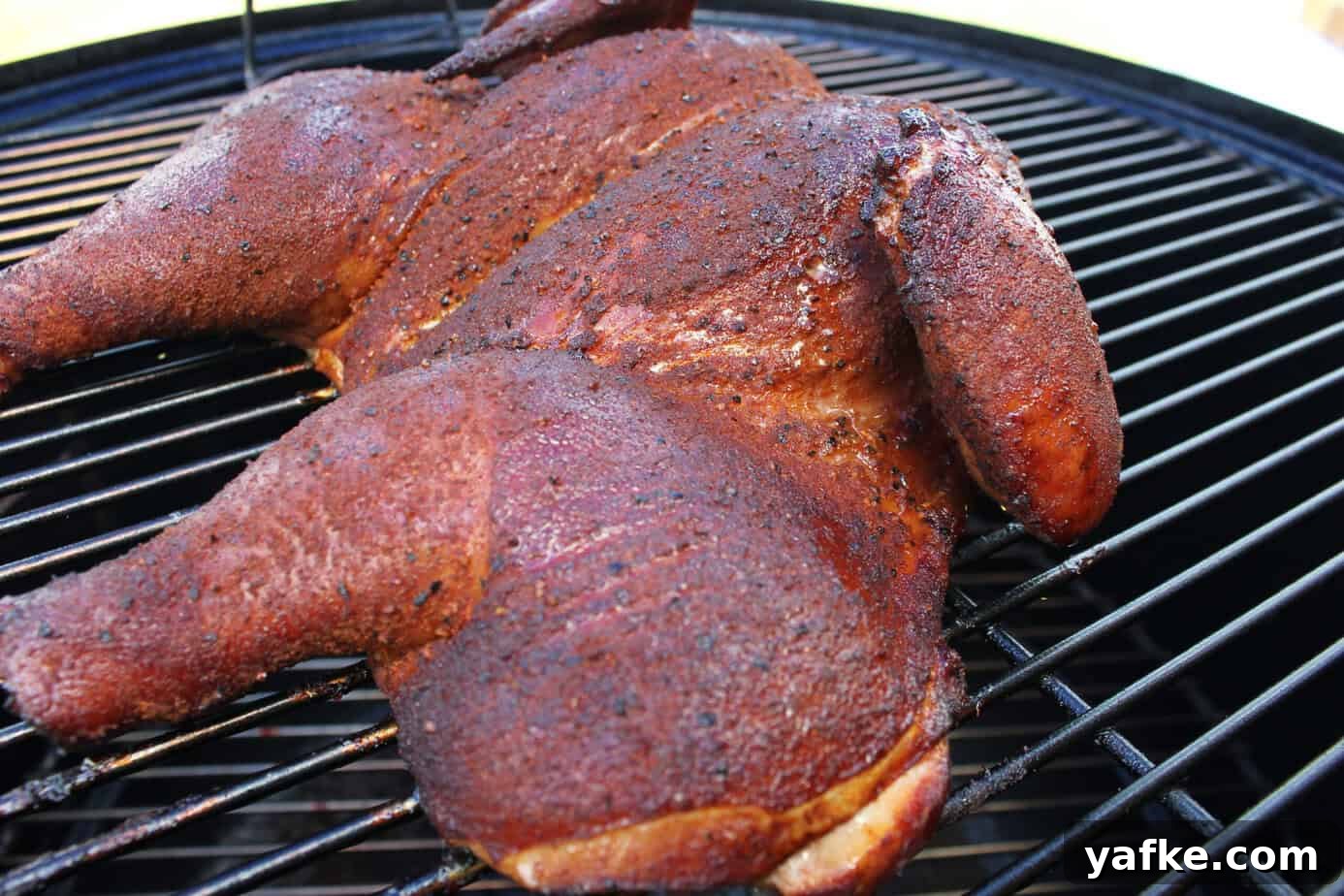
If you’ve never spatchcocked a chicken, don’t be put off by the term. Spatchcocking is simple, practical, and one of the best techniques for smoking whole chickens. Once you try it, it may easily become your preferred method.
Spatchcocking means removing the backbone and pressing the bird flat so it lies open on the grate. Flattening the chicken creates a more even surface, helping breast and thigh meat cook at the same rate, exposing more skin to direct heat for better crisping, and usually cutting overall cooking time.
For home smokers who struggle with dry breasts or uneven doneness, spatchcocking is a low-effort way to dramatically improve results. This guide explains what spatchcocking is, why it works so well for smoking, what tools you need, and step-by-step instructions for how to do it.
What Does Spatchcock Mean?
“Spatchcock” is a culinary term for removing the backbone of a chicken and flattening it. After the backbone is taken out, the bird opens like a book and can be laid skin-side up on the cooking grate.
This flatter shape reduces height differences between the breast and thighs, which promotes more even heat exposure and helps prevent the breast from finishing long before the legs are done. The overall result is a chicken that cooks faster, more consistently, and often with improved skin texture and juiciness.
Why Spatchcocking Works So Well for Smoking
A whole chicken has an uneven profile: breasts sit higher while thighs and legs are lower. That unevenness can cause parts of the bird to receive more heat than others and finish at different times.
By flattening the bird you create a uniform thickness, which helps the meat cook evenly and reduces total cook time—commonly by about 20 to 30 percent, depending on bird size and cooking temperature. Flattening also exposes more skin to heat, which improves the chance of achieving crisp, well-rendered skin instead of tough or rubbery skin.
Tools You Will Need
No special gear is required. A sturdy pair of kitchen shears makes spatchcocking fast and safe, but a sharp knife will also work. A stable cutting board and paper towels help make the process tidy.
| Tool | Why It Helps |
|---|---|
| Kitchen shears | Quickly and safely cut along both sides of the backbone |
| Sharp knife | Useful for trimming or working around cartilage |
| Cutting board | Provides a stable, sanitary workspace |
| Paper towels | Dry the skin before seasoning for better browning |
If you smoke poultry frequently, a good pair of kitchen shears is worth the investment.
How to Spatchcock a Chicken
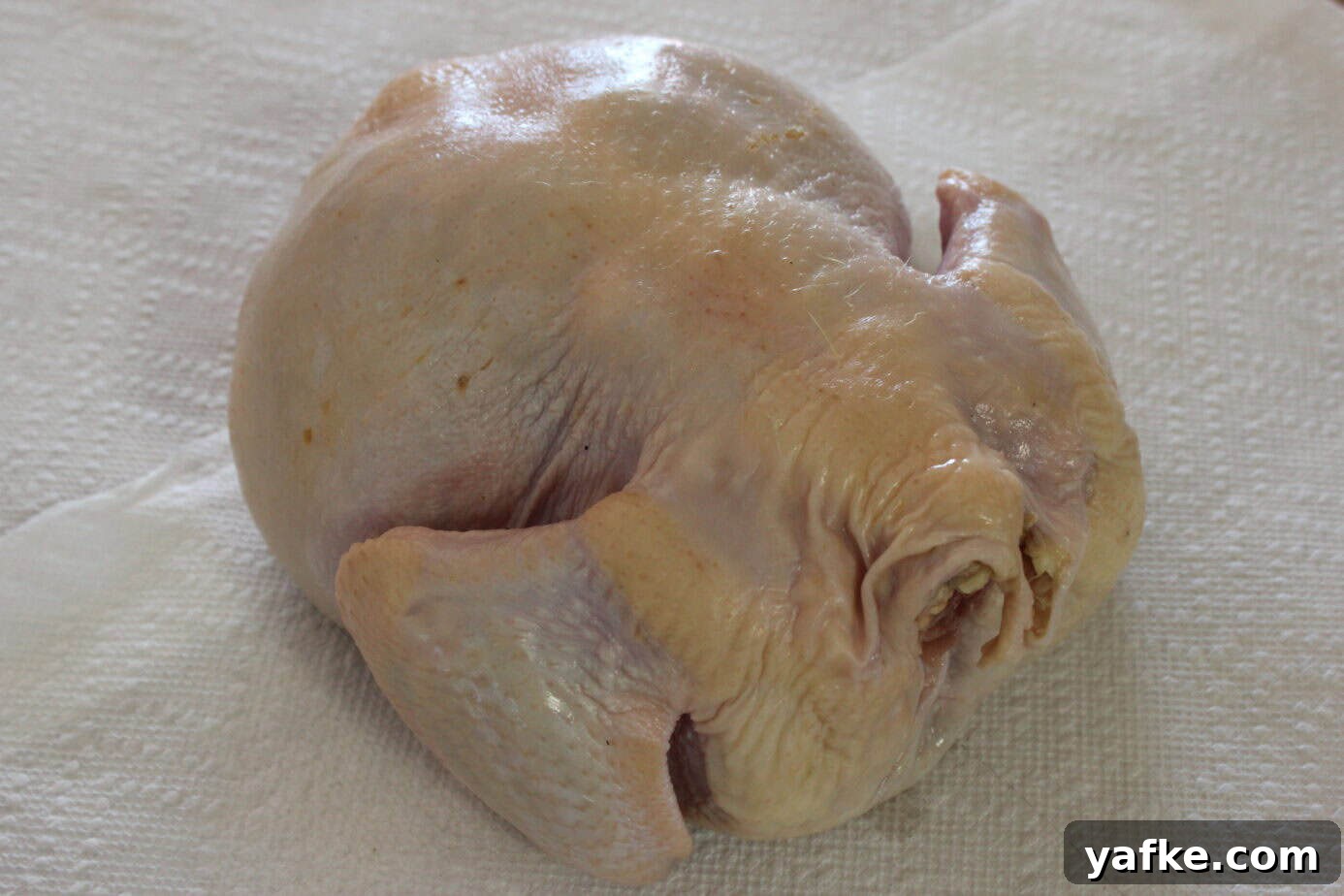
1. Place the Chicken Breast Side Down
Set the chicken on a cutting board with the backbone facing up so you can see where to cut.
2. Cut Along One Side of the Backbone
Using kitchen shears, cut along one side of the backbone from tail to neck. Take your time and follow the contour of the ribs.
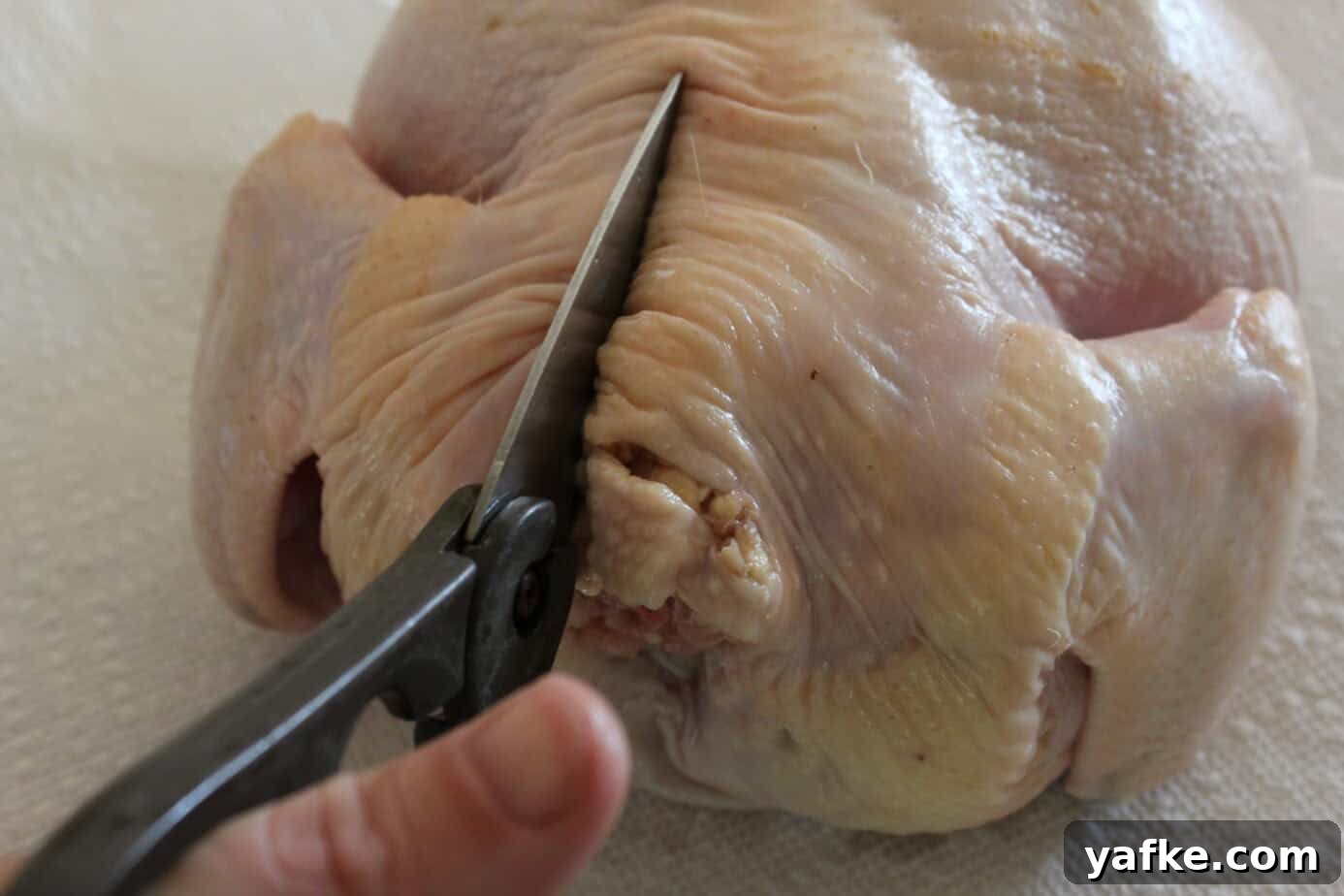
3. Cut Along the Other Side
Repeat the cut on the opposite side to fully remove the backbone. Set the backbone aside for stock or soup.
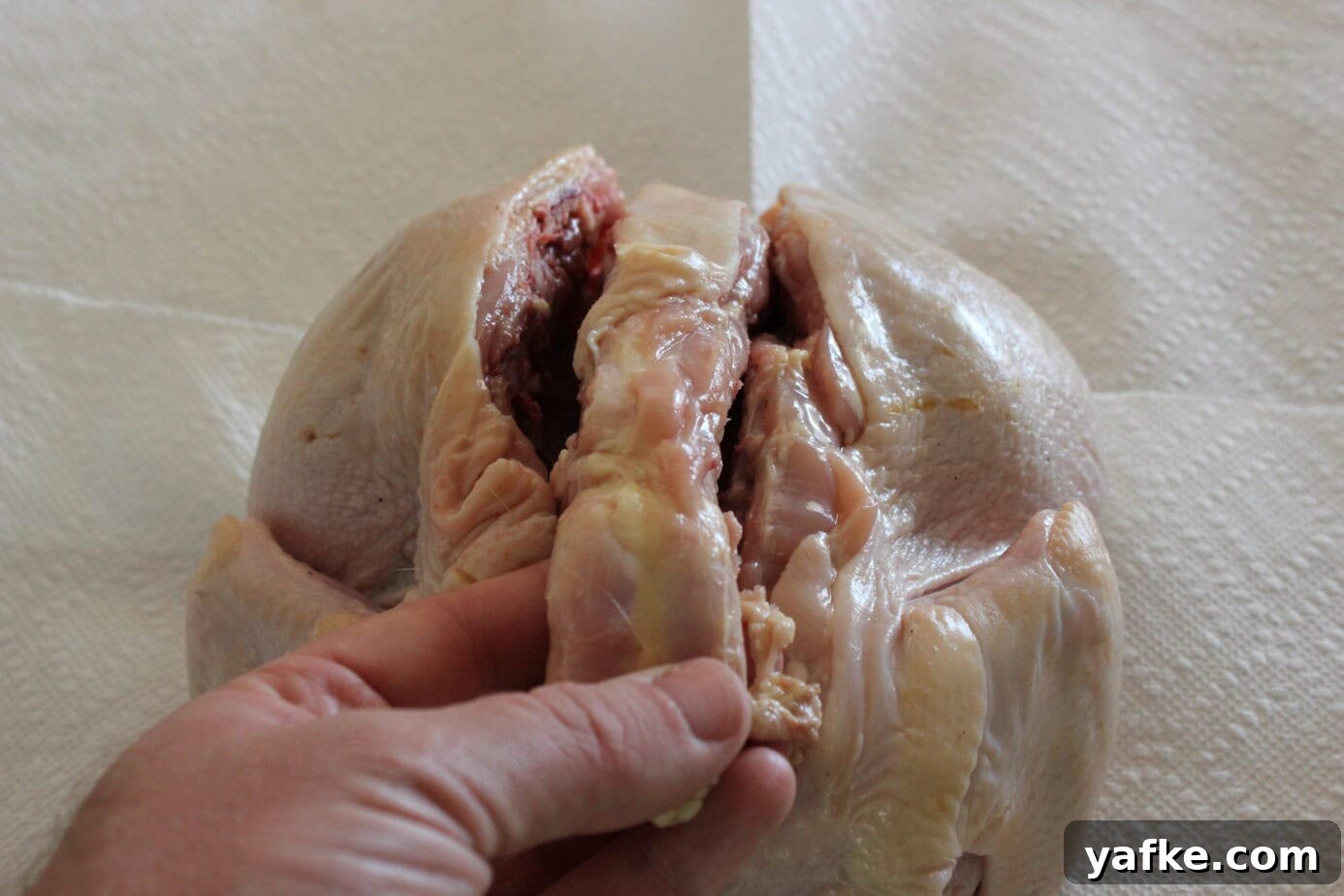
4. Open the Chicken
Turn the bird over and spread it open like a book. If you plan to season the cavity, you can press the bird just enough to expose the inside before flattening completely.
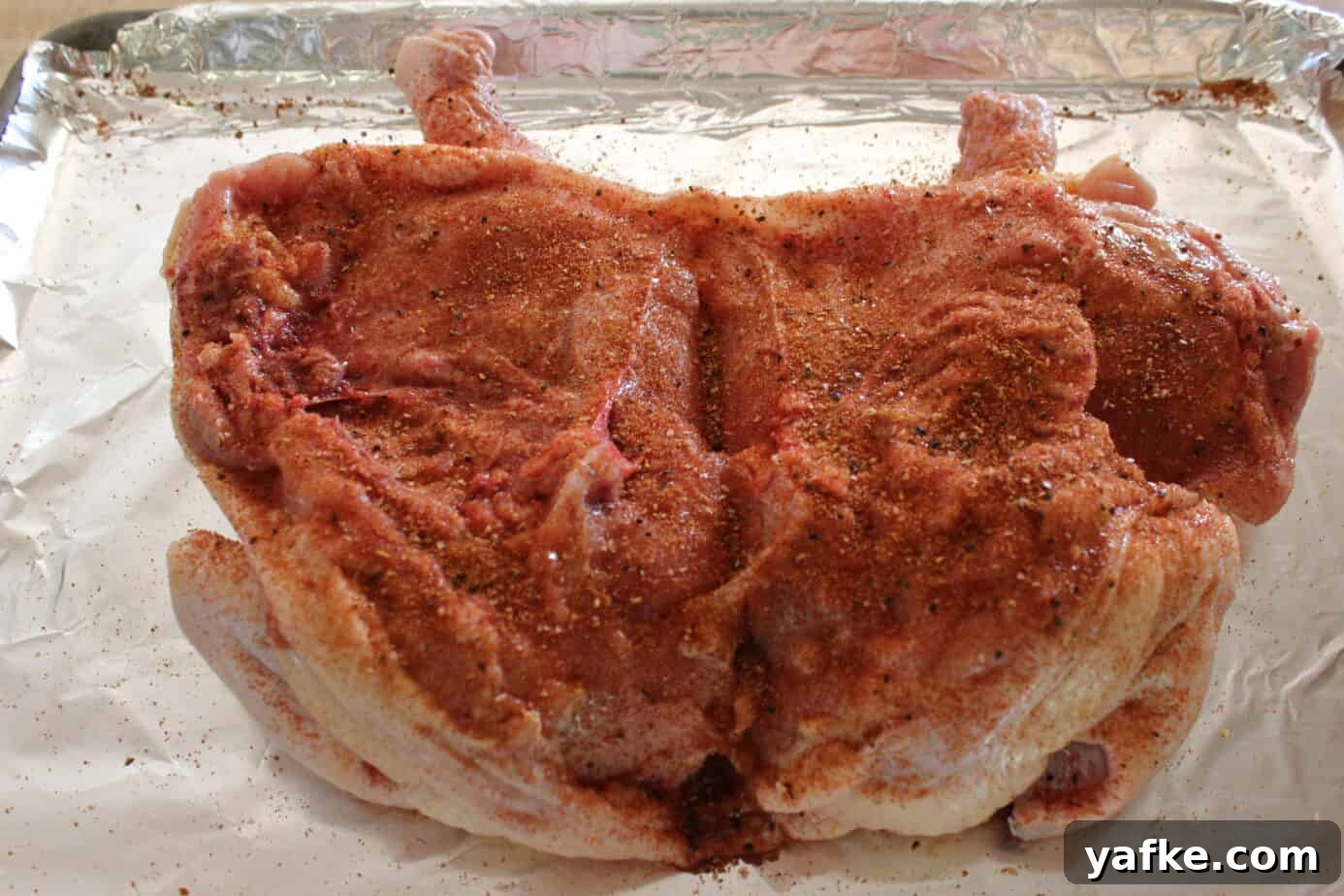
5. Flatten the Breastbone
Press firmly on the center of the breast until you feel the breastbone give and the bird lays flat. This creates the even profile that improves cooking consistency.
6. Tuck the Wing Tips (Optional)
Fold the wing tips behind the breasts to prevent them from overcooking and to create a neater presentation.
What to Do With the Backbone
Save the backbone—it’s excellent for making homemade chicken stock, soup, or gravy. You can refrigerate or freeze it until you’re ready to use it.
Seasoning and Brining
After flattening, treat the bird like any whole chicken: pat dry, brine if desired, and season generously. Brining is optional but can help the meat retain moisture and improve flavor throughout.
Smoking a Spatchcock Chicken
Because a spatchcock chicken has a more uniform thickness, it cooks predictably and often faster than an intact bird. A common approach is to smoke at a lower temperature initially—about 225°F (107°C)—for 45–60 minutes to build smoke flavor, then raise the heat to roughly 300–325°F (149–163°C) to finish and help the skin tighten and crisp.
Monitor internal temperatures and remove the chicken when the breast and thighs reach your preferred doneness. The flat shape helps both white and dark meat reach proper temperature more closely together.
Why I Like Spatchcocking
Spatchcocking addresses several common problems at once: more even cooking, juicier breast meat, better skin texture, and shorter cooking times. For many backyard cooks, those advantages make spatchcocking one of the best ways to prepare whole poultry for the smoker.
Frequently Asked Questions
Is spatchcocking better than smoking a whole chicken intact?
Often yes—flattening the bird promotes even cooking, speeds up the process, and improves the chances of crisp skin.
How much faster does a spatchcock chicken cook?
Cook time commonly drops by about 20 to 30 percent, depending on the bird’s size and your smoker temperature.
Do I have to brine a spatchcock chicken?
No, it’s optional. Brining helps with moisture retention and seasoning depth but isn’t required to get great results with spatchcocking.
Can I use the same method for turkey?
Yes. Spatchcocking works very well for turkey and other poultry, producing more even cooking and shorter cook times compared with cooking intact birds.