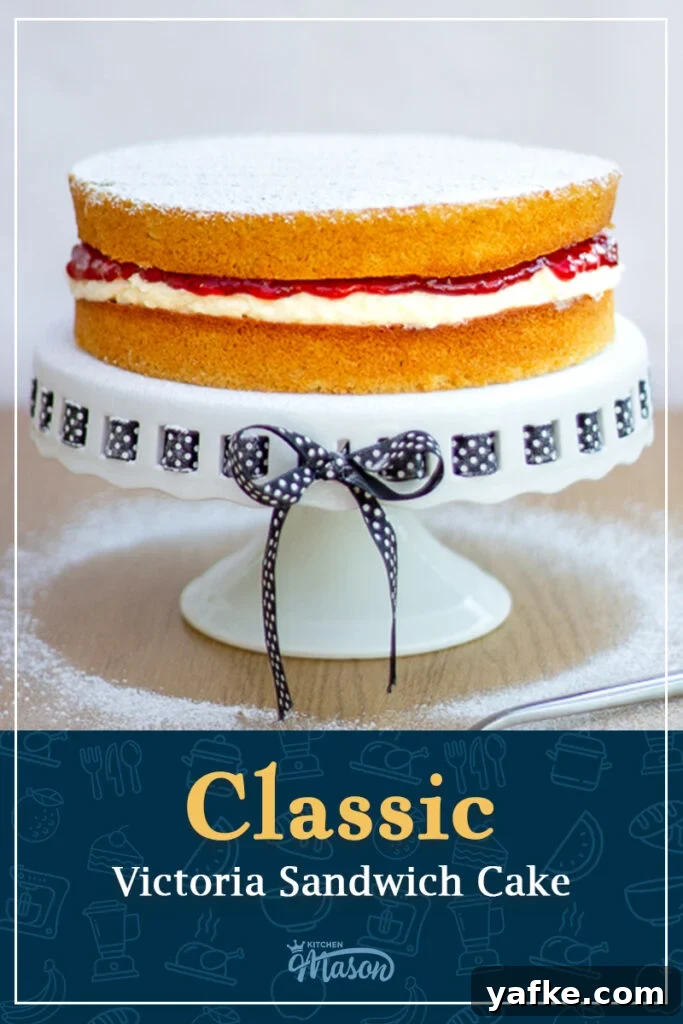
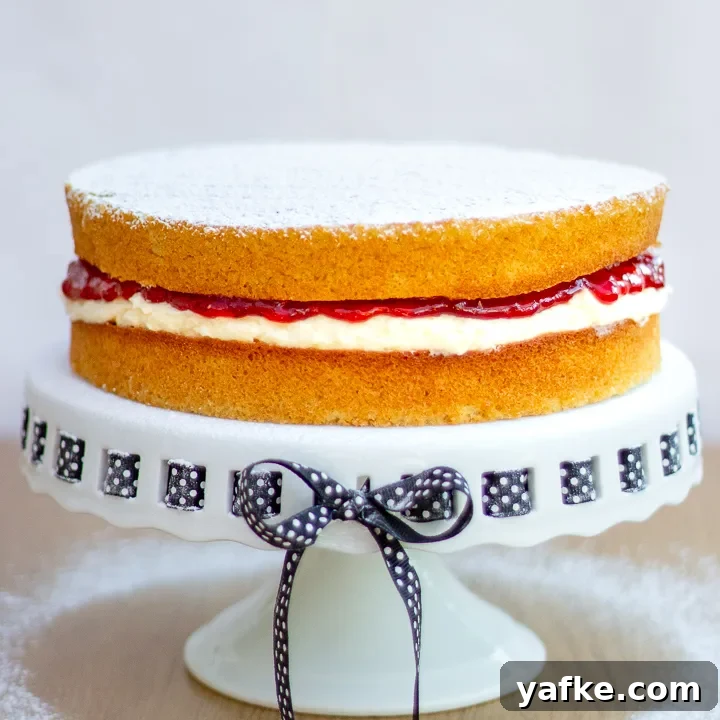
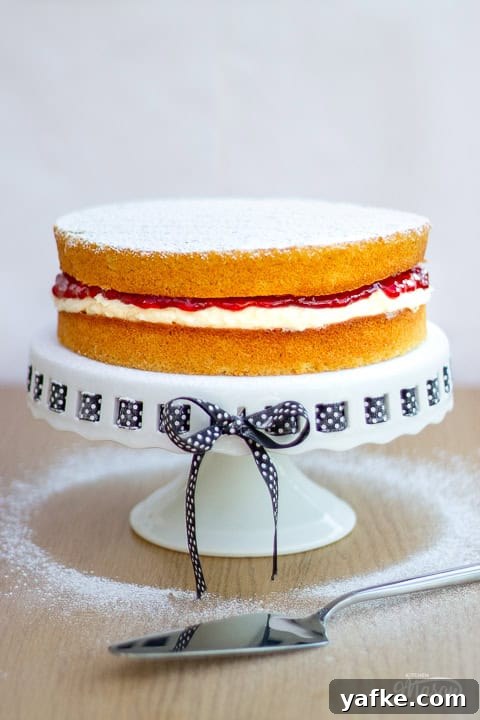
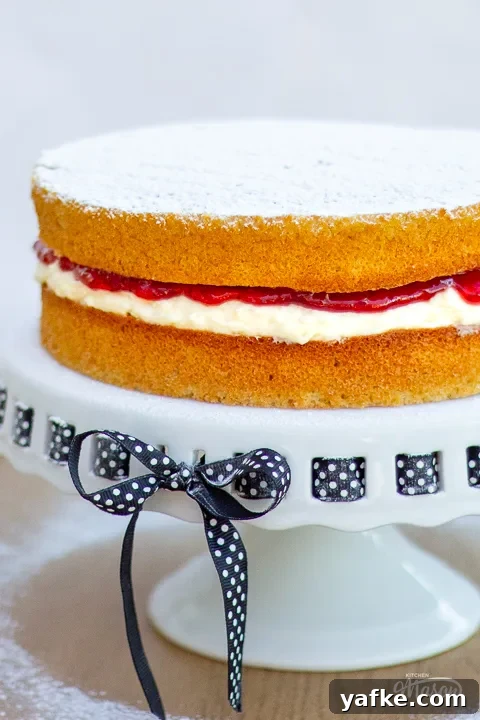
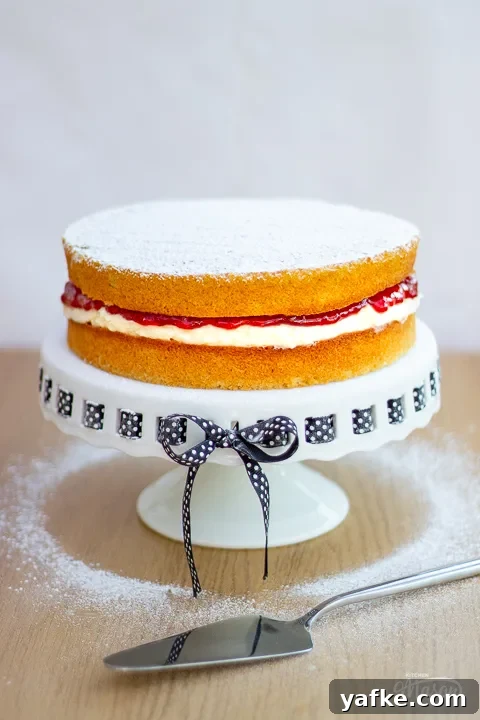
The Victoria sandwich is one of Britain’s favourite cakes, and for good reason. Named for Queen Victoria, this classic Victoria sponge proves that simple flavours can be the most satisfying. Two light vanilla sponge layers are filled with jam and either whipped cream or buttercream, then dusted with icing sugar — a timeless teatime treat.
Why you’ll love this recipe
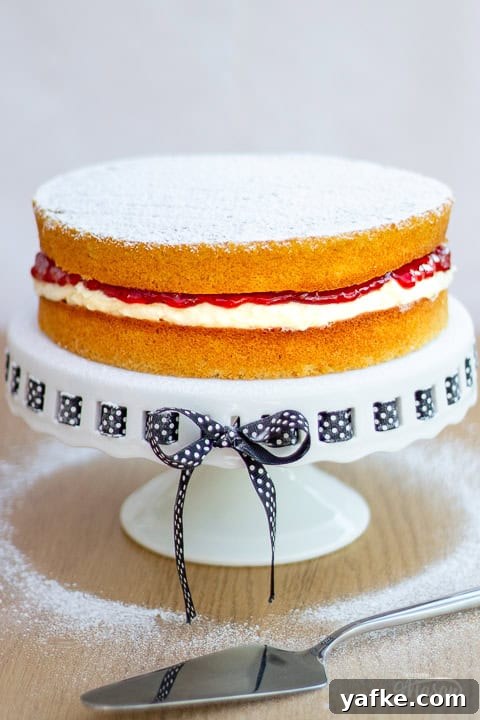
If you prefer a light, classic cake over something extremely rich, you’ll love this Victoria sandwich. The sponge is tender and airy, the jam adds bright fruitiness, and the cream or buttercream gives a silky finish. The recipe is straightforward, uses pantry staples, and is perfect for afternoon tea, celebrations, or a simple weekend bake.
What is a Victoria sandwich?
A Victoria sandwich (also called a Victoria sponge) is a traditional British cake made from two layers of sponge filled with jam and whipped cream or buttercream. The sponge is usually flavoured with vanilla and relies on baking powder for lift. While home bakers sometimes substitute buttercream for fresh cream, both variations are authentic and delicious.
Ingredients
Below are the ingredients for a classic 20cm (8″) Victoria sandwich, with notes on substitutions and small tips to help you get great results.
For the sponge cake
- Sugar – caster sugar works best because its fine crystals dissolve quickly and give a smoother batter.
- Butter – unsalted is preferred so you can control the salt. If using salted butter, omit any added salt in the recipe.
- Eggs – use large eggs at room temperature for best volume.
- Flour – self-raising flour is convenient here. If using plain flour, add the correct amount of baking powder.
- Baking powder – necessary for the rise; make sure it is fresh.
- Milk – any milk (dairy or plant) is fine to loosen the batter.
- Vanilla – optional but recommended for a classic flavour.
- Salt – a pinch enhances the sweetness.
For the filling
- Butter – use unsalted butter at room temperature for buttercream.
- Icing sugar – for sweetening the buttercream and dusting the top.
- Jam – raspberry is traditional, but strawberry or another berry jam also works well.
- Fresh cream (optional) – if you prefer, whip double cream with a little icing sugar to soft peaks instead of making buttercream.
Emma’s Top Tips
A few simple habits will help you bake a neat, consistent Victoria sandwich every time:
- Bring refrigerated ingredients to room temperature for even mixing and better texture.
- Line only the base of your tins; you don’t need to line the sides for this recipe.
- Use a quality vanilla extract if you include it — it noticeably improves flavour.
- Bake on the middle shelf to reduce doming; you can also press a slight dip into the batter to help it level.
- Avoid opening the oven until the cake is close to done; sudden temperature changes can make sponges collapse.
- Turn the top sponge upside down when assembling for a flat finish, then dust with icing sugar.
Timings
- Allow about 1 hour to bring ingredients to room temperature if taken from the fridge.
- Mixing the sponge batter should take roughly 10 minutes.
- Bake time: 15–20 minutes at the temperature given below.
- Cooling time: allow 30–40 minutes for the layers to cool fully before decorating.
- Making buttercream: about 10 minutes. Assembling: around 5 minutes.
Victoria Sandwich Cake – Step by Step
Recipe yields: 10 servings (20cm / 8″ cake)
Ingredients (for a 20cm / 8″ cake)
For the Sponge
- 200g caster sugar
- 200g unsalted butter, room temperature
- 4 large eggs, room temperature
- 200g self-raising flour
- 1 tsp baking powder
- 2 tbsp milk
- 1 tsp vanilla extract (optional)
- ¼ tsp salt
For the Filling
- 100g unsalted butter, room temperature
- 140g icing sugar
- ½ tsp vanilla extract (optional)
- Approx. 300g raspberry jam
- Icing sugar for dusting
Optional: whip 200ml double cream with 40g icing sugar to soft peaks instead of making buttercream.
Essential equipment
- Two 8″ (20cm) round sandwich tins
- Stand mixer or a large mixing bowl and electric hand whisk
- Spatula and palette knife
- Small bowl for the jam
Sponge instructions
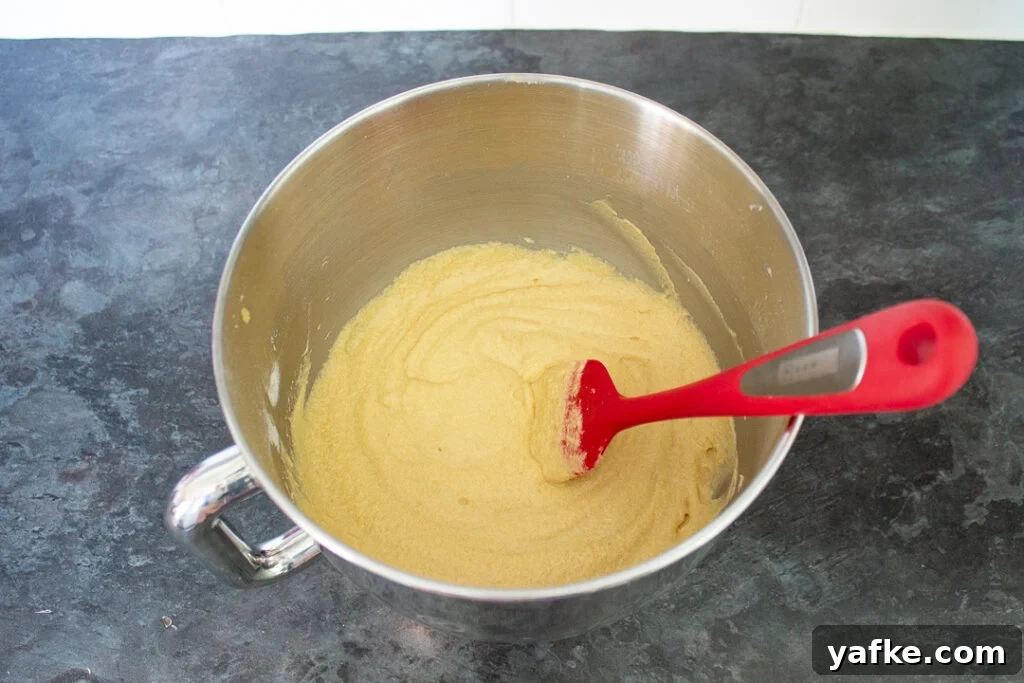
Preheat the oven to 190°C (170°C fan) / 374°F. Grease the bases of two 20cm tins and line with baking paper. Put all sponge ingredients into a mixer or large bowl and whisk until just smooth and lump-free — do not overmix. Divide the batter evenly between the prepared tins and bake in the centre of the oven for 15–20 minutes, until a skewer comes out clean. Cool in the tins for 5–10 minutes, then turn out onto a wire rack to cool completely.
Filling instructions
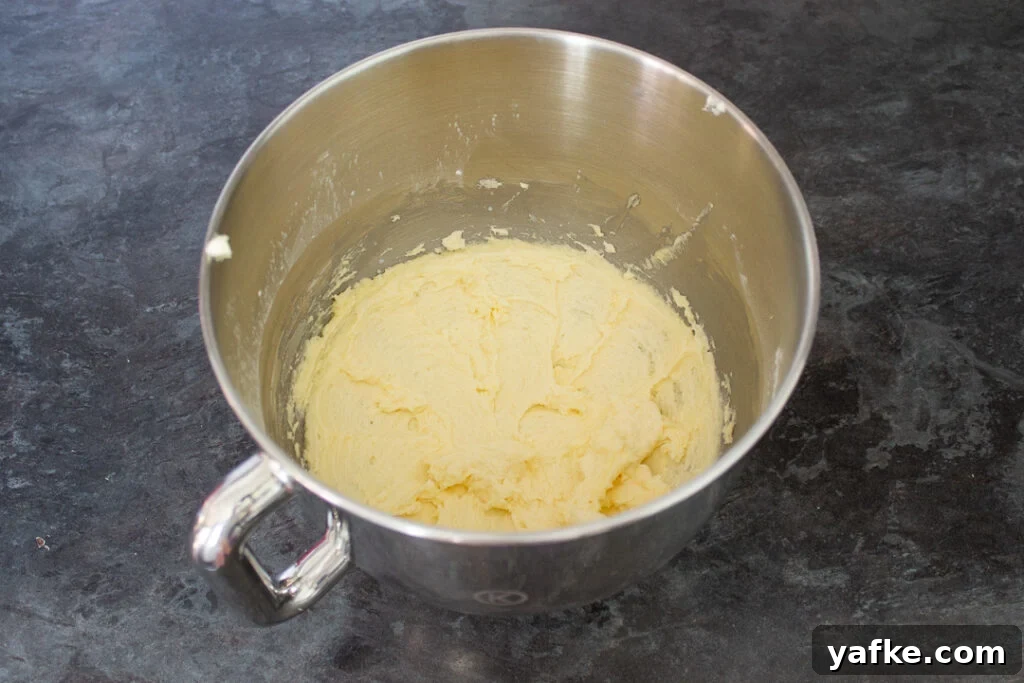
For buttercream, beat the softened butter with the icing sugar and vanilla on low speed until combined, then increase speed and beat for 3–4 minutes until light and fluffy. If it seems too stiff, add a splash of milk.
Assembly
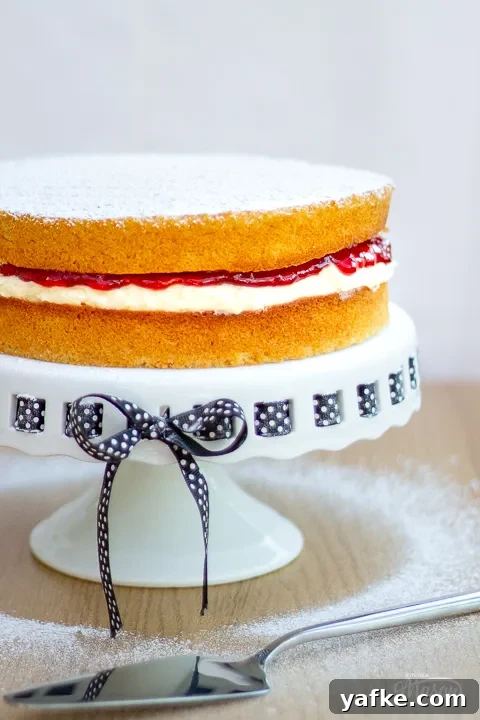
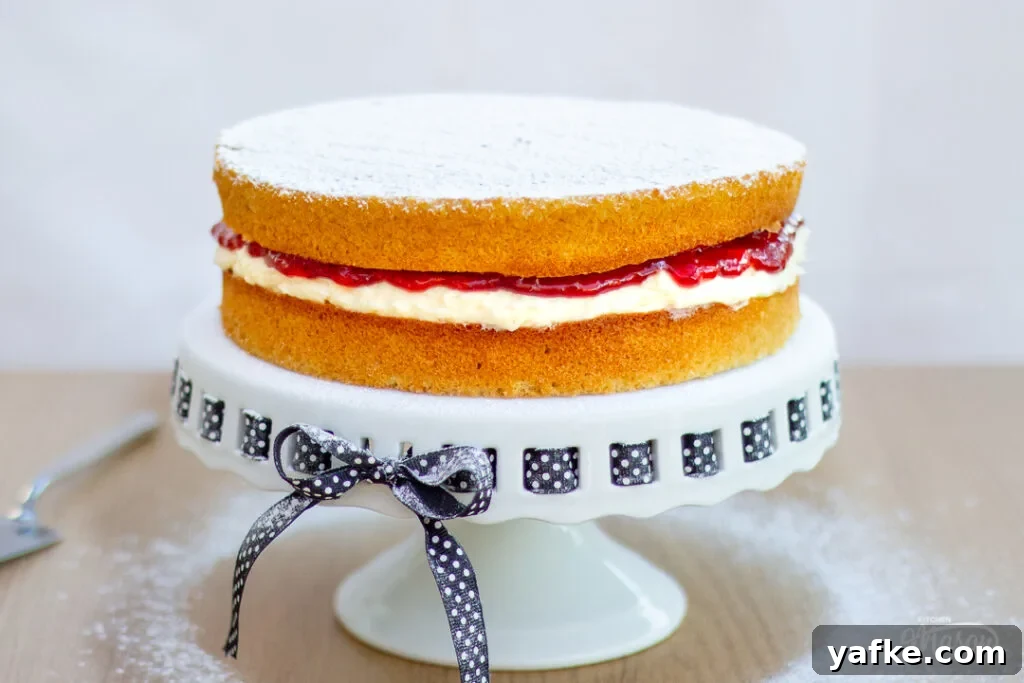
Place one sponge layer on a plate or cake stand and level the top if needed. Spread a layer of buttercream, then spoon and gently spread the jam over the cream, leaving a small gap at the edge so the filling doesn’t spill out. Top with the second sponge (turned upside down for a flat finish) and dust generously with icing sugar before slicing and serving.
How to store a Victoria sandwich cake
If filled with buttercream, store the cake in a covered tin at room temperature and consume within 2–3 days. If using whipped fresh cream, keep the cake covered in the refrigerator and eat within 1–2 days.
FAQs
Loved this Victoria sandwich recipe?
If you tried this recipe, share a photo on your social channels and enjoy the simple pleasure of a classic British sponge.