
Brisket spritz is a simple technique many BBQ enthusiasts use to keep long-smoked meat moist and flavorful throughout the cook.
Key Takeaways
- A brisket spritz is a liquid mixture that you mist onto the surface of a brisket during smoking.
- Spritzing helps maintain surface moisture to prevent the meat from drying out during long cooks and can contribute to a better bark and smoke absorption.
- Common spritz ingredients include apple juice, apple cider vinegar, water, beer and small additions like Worcestershire, spices, or oil.
Jump to Section
Why Should I Use a Brisket Spritz?
Spritzing is a technique worth trying for several practical reasons. It’s straightforward to do, requires only a spray bottle and a few pantry ingredients, and can make a noticeable difference in the final texture and flavor of a smoked brisket.
Below are the main benefits to consider.
Retain Moisture and Add Flavor
The primary purpose of a spritz is to help the brisket retain surface moisture while it smokes for many hours. High heat and long cook times naturally draw moisture out of meat; periodic spritzing keeps the surface from drying out completely.
Keeping the surface slightly damp helps the rub adhere and develop a better bark instead of burning or becoming overly hard. A proper spritz can also encourage a more attractive smoke ring and improved overall flavor when paired with the right liquid.
Get More Smoke Flavor
Wet, slightly cool surfaces absorb smoke more effectively than dry ones. Spraying the meat periodically can help the outer layer take on more smoke, deepening the aroma and taste. For example, using apple juice in a spritz can help sugars caramelize on the bark, producing appealing color and texture.
Spritzing vs Other Methods
Spritzing uses a spray bottle to mist thin, well-mixed liquids over the meat. Because the mixture must pass through a nozzle, a simple recipe made from low-viscosity liquids works best.
Other techniques such as basting and mopping use thicker sauces applied with a brush or mop. Those approaches can add flavor but are more likely to disturb the rub or create a heavier, wetter bark. Spritzing is gentler, less likely to wash away seasoning, and easier to apply quickly during the cook.
What Are the Ingredients For a Brisket Spritz?
Apple juice is one of the most popular and reliable spritz ingredients. It adds moisture, mild sweetness and helps with caramelization on the bark.
Apple cider vinegar is another common base that brings a bright, tangy note and helps balance richness. Red wine vinegar can be used when you want a more neutral, less fruity tang.
Other useful ingredients to mix into a spritz (in small amounts) include:
- Melted butter or oil (for richness)
- Beer or dark ale (for depth and complexity)
- Lemon juice
- Worcestershire sauce
- A splash of whiskey
- Smoked paprika, garlic, black pepper, and salt
- Hot sauce for a kick
Keep flavors balanced and avoid combining ingredients that clash. For a classic Texas-style brisket, simple seasoning—salt, black pepper, and garlic—is often preferred, with a mild spritz to maintain moisture.
One versatile blend many home pitmasters use is apple juice with a touch of Worcestershire and water—simple, effective, and compatible with most rubs.
How Do I Use Apple Cider Vinegar as a Brisket Spray?
Apple cider vinegar is popular because it’s affordable, flavorful, and versatile. When combined with water or apple juice and a little oil or alcohol, it helps create a spritz that promotes good bark development while adding tang.
Apple Cider Vinegar Brisket Spritz Recipe
A balanced starting recipe: mix two cups apple juice, one cup water, and two cups apple cider vinegar. Add 1/2 teaspoon each of salt and black pepper, two tablespoons of olive oil, and one teaspoon smoked paprika. Adjust quantities to taste and thin with water if needed to ensure the mixture sprays easily.
Why Spray Brisket With Beer?
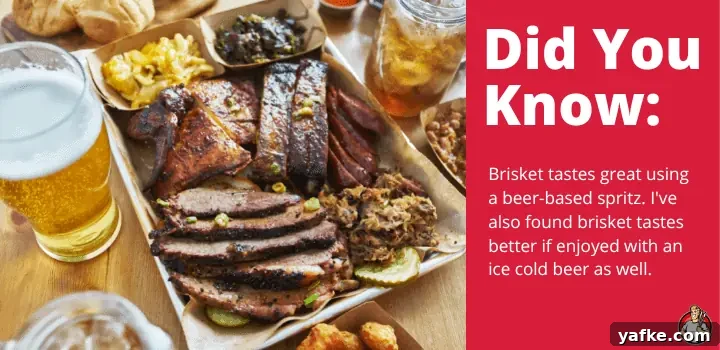
Beer can add body and complexity to a spritz. While light lagers work, darker ales contribute richer malty notes that can complement beef. As always, use what suits your flavor preference and test small variations to find what you like best.
Beer Based Brisket Spritz Recipe
A simple beer spritz: combine one bottle of beer with 1/2 cup apple cider vinegar, 1/2 cup vegetable oil and enough water to thin for spraying. Season lightly with salt and pepper. Adjust proportions and seasonings to match your rub and palate.
Can I Use Worcestershire Sauce Too?
Yes. A small amount of Worcestershire sauce adds savory depth and helps flavors cling to the meat. Use it sparingly in the spritz and consider adding a bit more in later spritzes or brushing a light coat after cooking for an extra flavor boost. If you’re sensitive to salt, dilute the spray with water.
Is Butter a Good Ingredient?
Butter can add richness, but real butter may solidify and clog a spray nozzle unless kept warm and well emulgated. Liquid margarine or clarified butter are easier to use in a spritz. If you want buttery flavor without nozzle issues, mix a small amount of oil with butter flavoring or use melted clarified butter kept warm.
How Often Should I Spray the Brisket?
Give the brisket time to form an initial bark. Many pitmasters wait 90–120 minutes before the first spritz, then spray every 45–60 minutes after that. Avoid over-spraying: opening the smoker too frequently releases heat and lengthens cook time. Spray quickly and close the lid immediately to minimize temperature loss.
Do I Need To Spray My Brisket?
Spritzing is optional. It’s a technique favored by many professionals for the benefits it provides, but it’s not required to produce excellent brisket. If you prefer simplicity, want a slightly faster cook, or prefer an undisturbed bark, you can skip spritzing. If you have time and enjoy experimenting, spritzing is worth trying to see how it affects your results.
Recap
Brisket spritzing is a low-cost, low-effort technique that helps retain moisture, improve smoke uptake and develop a better bark when used correctly. It adds time and requires discipline to avoid over-spraying, but many pitmasters find the flavor and texture improvements worthwhile. Try a simple apple juice or apple cider vinegar-based spritz and adjust to your taste as you gain experience.