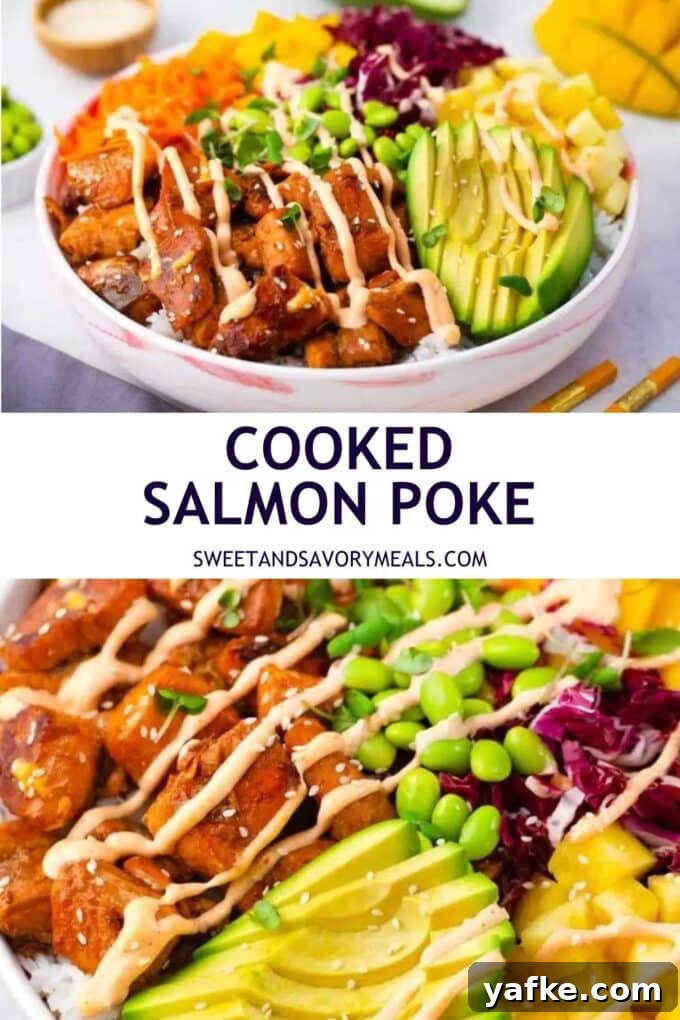
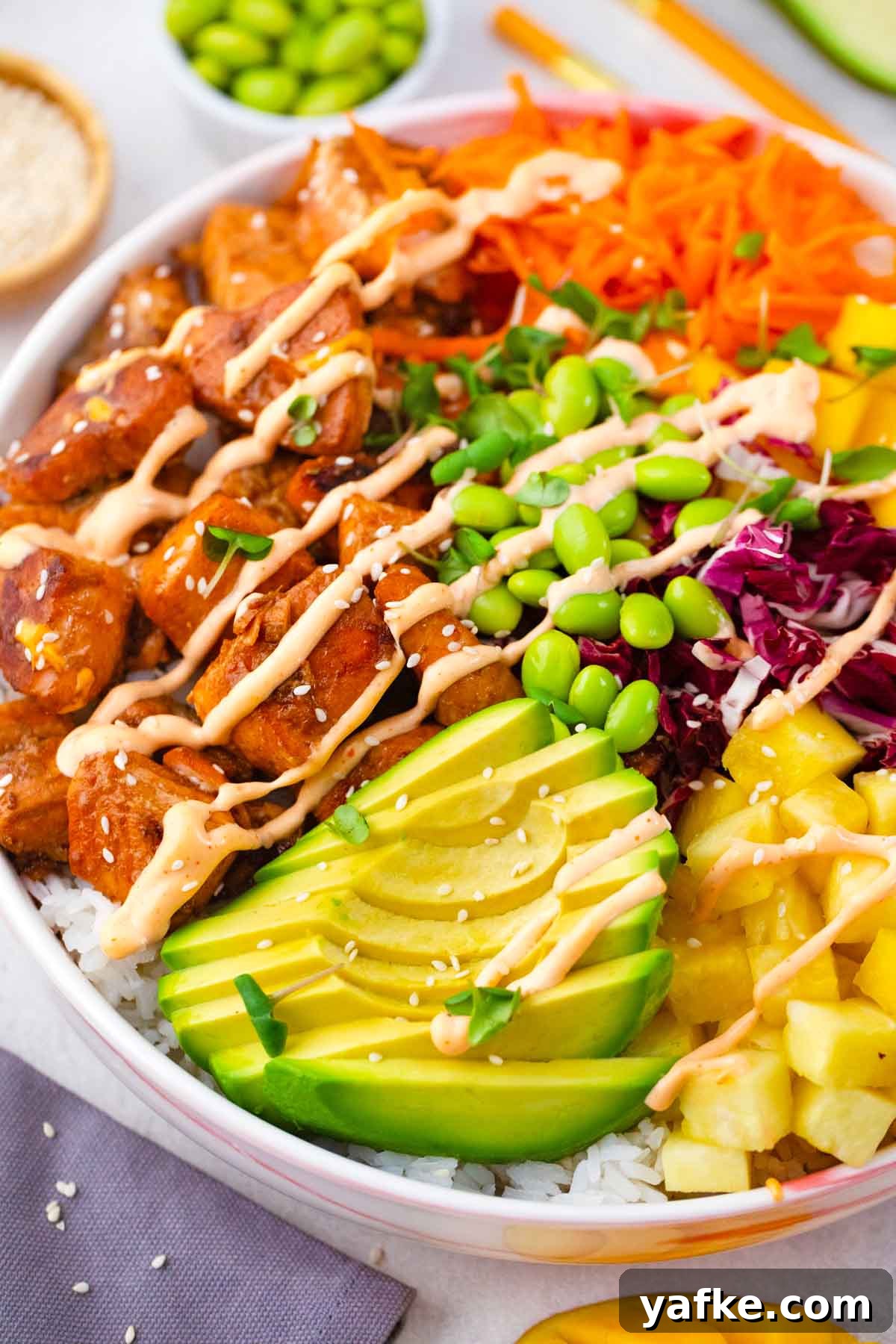
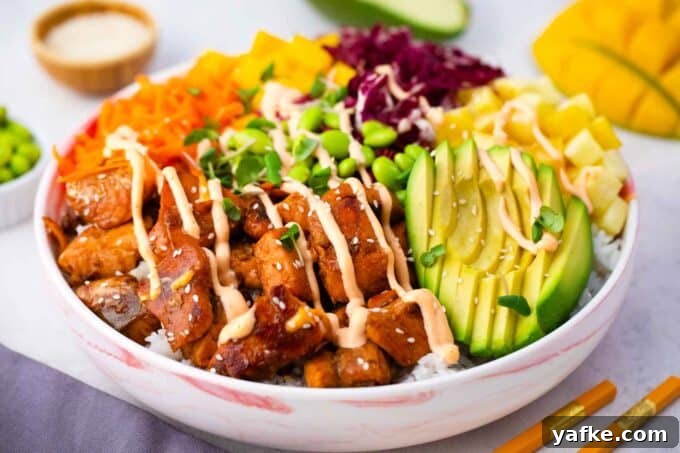
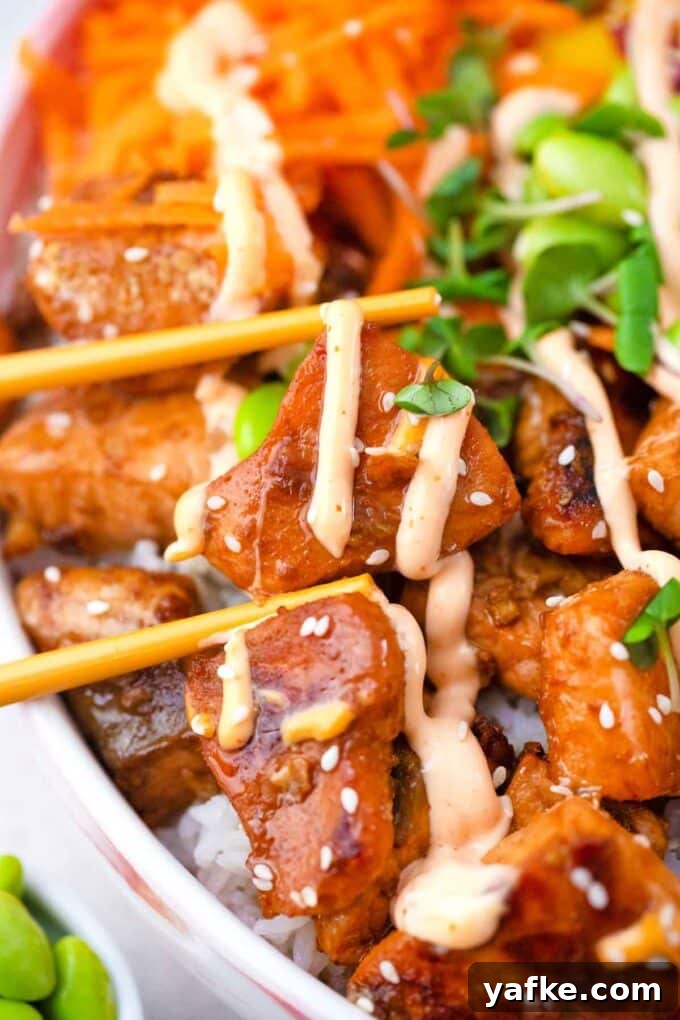
Cooked Salmon Poke Bowl features honey-garlic salmon served over sushi rice with crunchy vegetables, fresh fruit, and a drizzle of spicy mayo. It’s a great alternative for anyone who loves the flavors of poke but prefers cooked fish — full of bold, balanced flavors and easy to prepare at home.
Topped with spicy mayo and sesame seeds, this bowl combines savory, sweet, tangy, and crunchy elements in every bite. If you enjoy honey-garlic salmon, it works beautifully with many preparations: baked brown-sugar glazed salmon, teriyaki salmon, or a simple honey-soy glaze all make excellent swap-in options for the salmon in this bowl.
Ingredients needed:
- Fresh salmon fillets: cut into small 1″ cubes.
- Minced garlic
- Grated ginger
- Toasted sesame oil
- Low-sodium soy sauce (substitute tamari or coconut aminos for gluten-free)
- Honey
- Neutral oil: canola, avocado, or light olive oil for searing.
- Sriracha or chili garlic sauce (optional for heat)
- Green onion and sesame seeds for garnish
Serve with:
- Warm sushi rice (or white, brown, cauliflower, or wild rice)
- Cubed pineapple
- Cubed mango
- Edamame
- Shredded purple cabbage
- Shredded carrots
- Sliced avocado
- Spicy mayo (mayo mixed with lime and sriracha)
- Microgreens or seaweed salad
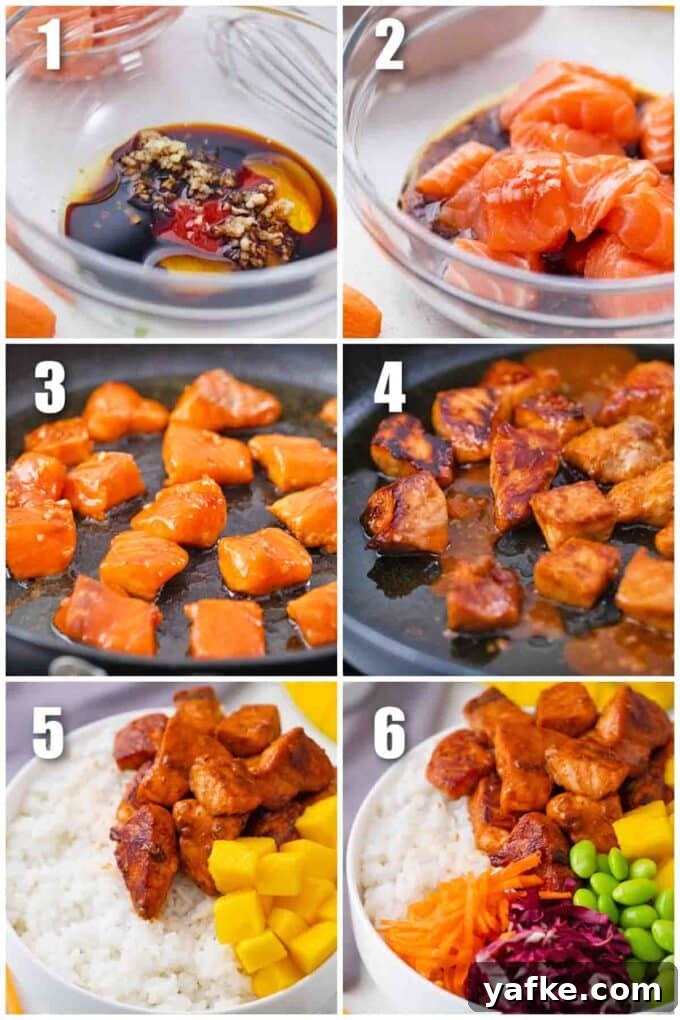
How to make Cooked Salmon Poke Bowl from scratch
- Make the marinade: In a bowl combine soy sauce, toasted sesame oil, honey, minced garlic, grated ginger, and sriracha (if using). Add the cubed salmon and toss to coat. Marinate in the refrigerator for at least 30 minutes, up to 6 hours.
- Heat the skillet: Preheat a large skillet over medium-high heat. Add a small amount of oil and swirl to coat the pan.
- Sear the salmon: Use tongs to add the salmon cubes to the hot skillet. Sear 2–3 minutes per side until nicely browned and crisp on the exterior.
- Finish with the sauce: Pour any remaining marinade into the skillet and cook 1 more minute until the sauce thickens slightly and coats the salmon. Ensure the salmon is cooked through.
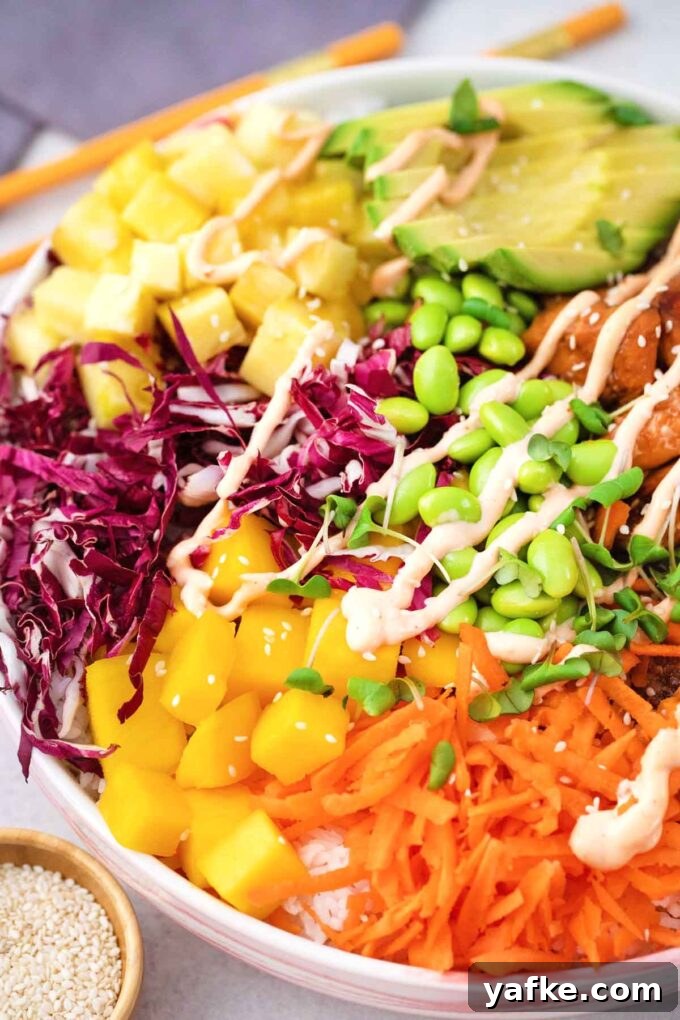
- Assemble the bowls: Divide warm rice among bowls. Top with the cooked salmon and arrange toppings like cabbage, mango, pineapple, edamame, carrots, avocado, microgreens, and sesame seeds. Drizzle with spicy mayo and serve.
Recipe variations:
- Brighten it: Add a squeeze of lime or lemon juice for extra acidity.
- Gluten-free: Replace soy sauce with tamari or coconut aminos.
- Tangy option: Stir 1/4 cup of rice vinegar into the rice or the sauce for a tangier profile.
- Other seafood: Swap salmon for seared ahi tuna, mackerel, or another sushi-grade fish if you prefer raw fish or lightly seared pieces.
- Teriyaki twist: Use teriyaki sauce in the marinade for a sweeter, deeper flavor.
Frequently asked questions
What is a poke bowl?
Poke (pronounced poh-kay) is a Hawaiian preparation originally meaning “to slice” or “to cut.” Traditional poke bowls feature cubed raw fish, rice, vegetables, and a savory sauce. Modern poke bowls can include cooked proteins, a wider variety of vegetables, and fruits such as mango and pineapple for contrast.
What rice should I use?
Sushi rice (short-grain Japanese rice) is ideal for authentic texture, seasoned with rice vinegar, sugar, and salt. You can also use white or brown rice, wild rice, or cauliflower rice for a low-carb option. Cooked rice can be prepared ahead to reduce assembly time.
Should I remove the salmon skin?
For bite-sized cubes it’s easiest to remove the skin before cutting. If you leave the skin on while searing larger fillets, it helps protect the flesh from overcooking; remove it after cooking if desired.
How to store leftovers
- Refrigerate: Store leftover components in airtight containers in the fridge for up to 3 days. Keep rice and salmon separate when possible for best texture.
- Freezing: Freezing finished poke bowls is not recommended; cooked salmon and fruit textures change.
- Reheating: Reheat salmon briefly in the microwave (45–90 seconds) or in an air fryer for about a minute, depending on portion size. Reheat rice separately for best results.
Nutrition overview (per serving)
Approximate values: 680 kcal; 88 g carbohydrates; 53 g protein; 22 g fat. Adjust portions and ingredients to suit dietary needs and preferences.
Cooking tips:
- Use a sharp knife for clean, even salmon cubes.
- Marinate the salmon at least 30 minutes for best flavor penetration.
- Flash-frozen sushi-grade salmon is a safe and convenient alternative to fresh.
- To make spicy mayo, mix mayonnaise with lime juice and sriracha to taste.
- Cook rice ahead to streamline assembly and meal prep.