
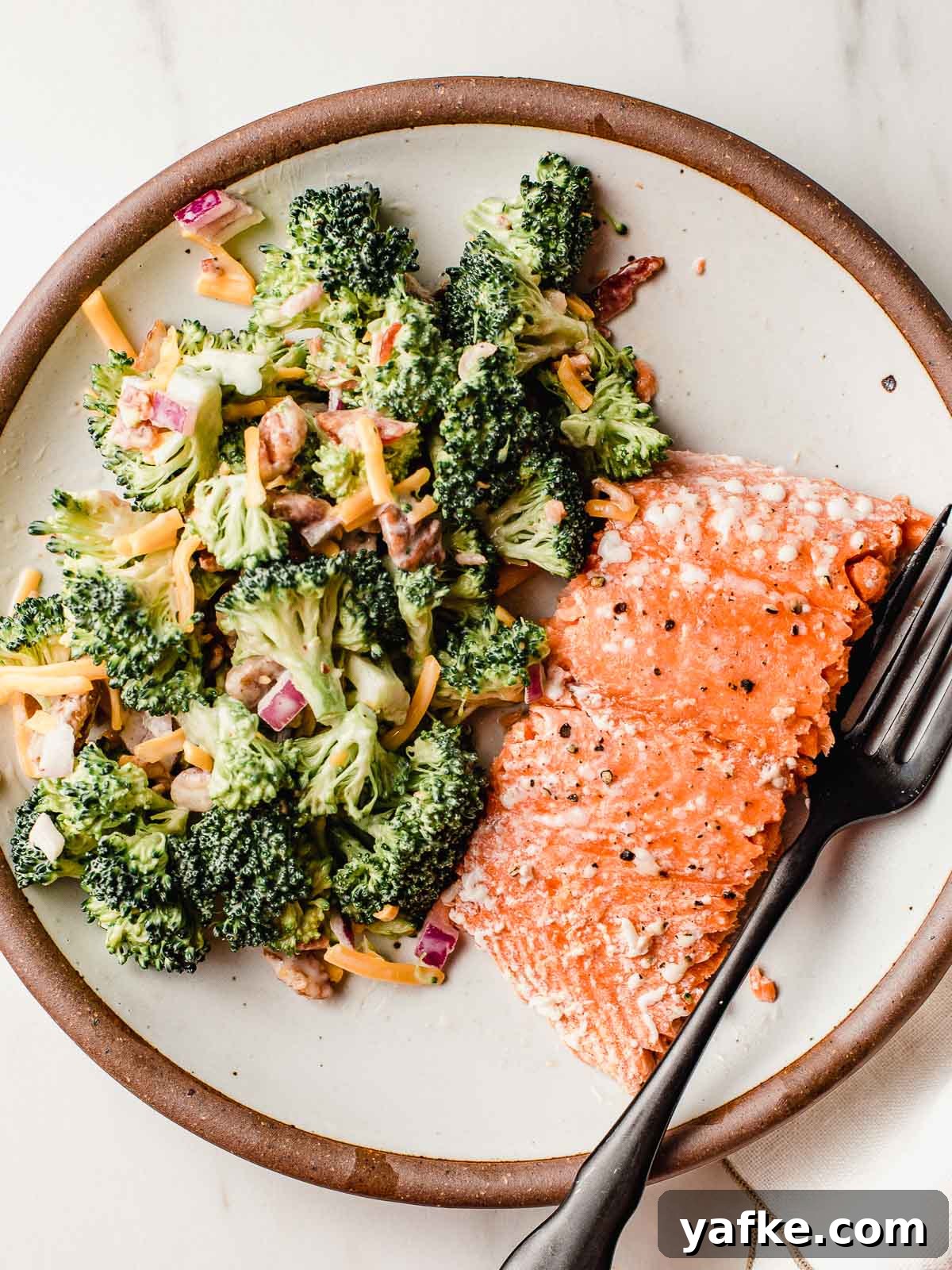
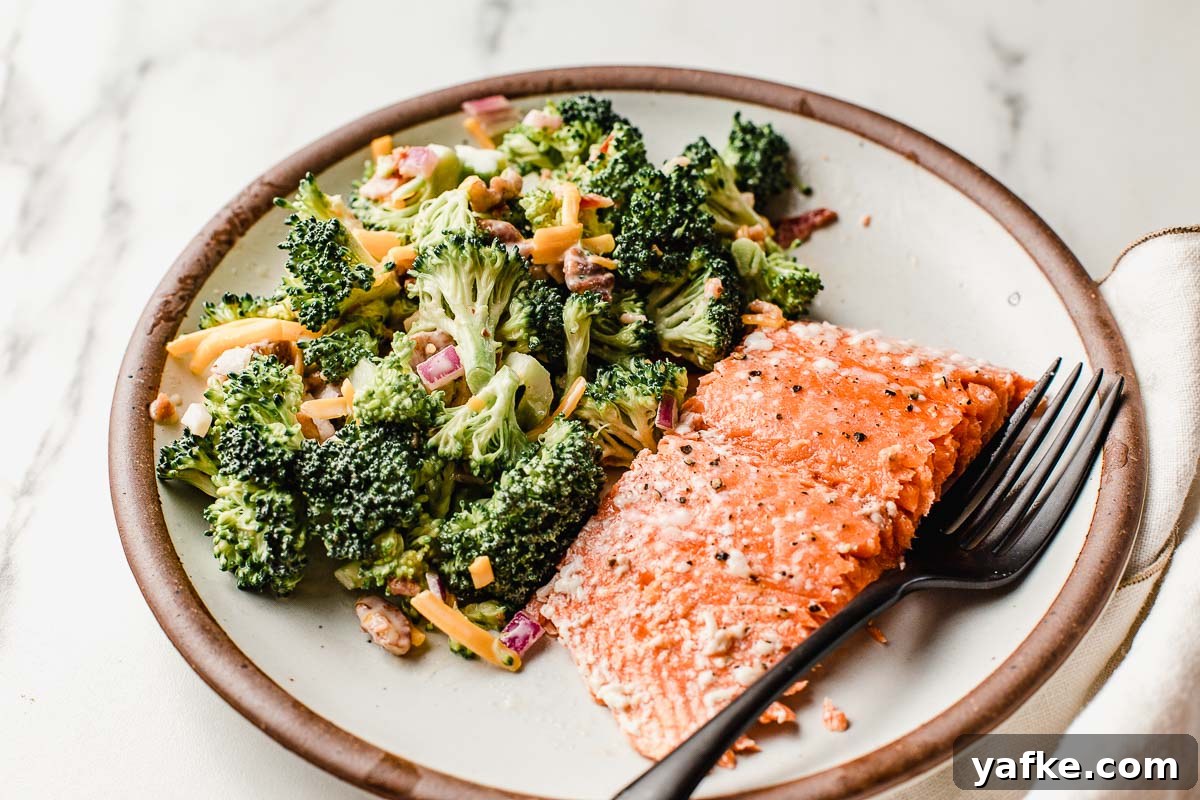
Baked salmon is a healthy, protein-rich dinner that’s ready in under 20 minutes. When cooked correctly, it turns out moist, tender and flaky every time—perfect for busy weeknights and easily paired with many side dishes.
This simple oven-baked salmon method is one of the most reliable ways to prepare fish: it’s fast, forgiving, and highlights the natural flavor of wild-caught salmon. Serve it alongside a low-carb broccoli salad, creamy coleslaw, roasted vegetables, or toss flakes into a salad or salmon patties. The versatility makes it a weeknight staple.
I prefer baking salmon wrapped in foil because it traps steam and keeps the fillet moist without overcooking. If you prefer not to use foil, parchment paper works well too—the edges can be folded to form a steam pocket that achieves the same result.
What is the best way to bake salmon?
There are a few reliable oven methods: bake uncovered on a sheet pan, roast in a dish, or bake wrapped in foil for extra moisture retention. Baking in foil creates a gentle, steamy environment that prevents the flesh from drying out while concentrating flavor.
To bake in foil: preheat your oven to 375°F, line a baking sheet with foil, and place the salmon skin-side down on the foil. Brush the flesh with ghee (or your preferred oil like olive or avocado oil), season with salt and black pepper, then fold the foil sides up and crimp to form a sealed packet. This technique locks in the juices so the finished salmon is tender and flaky.
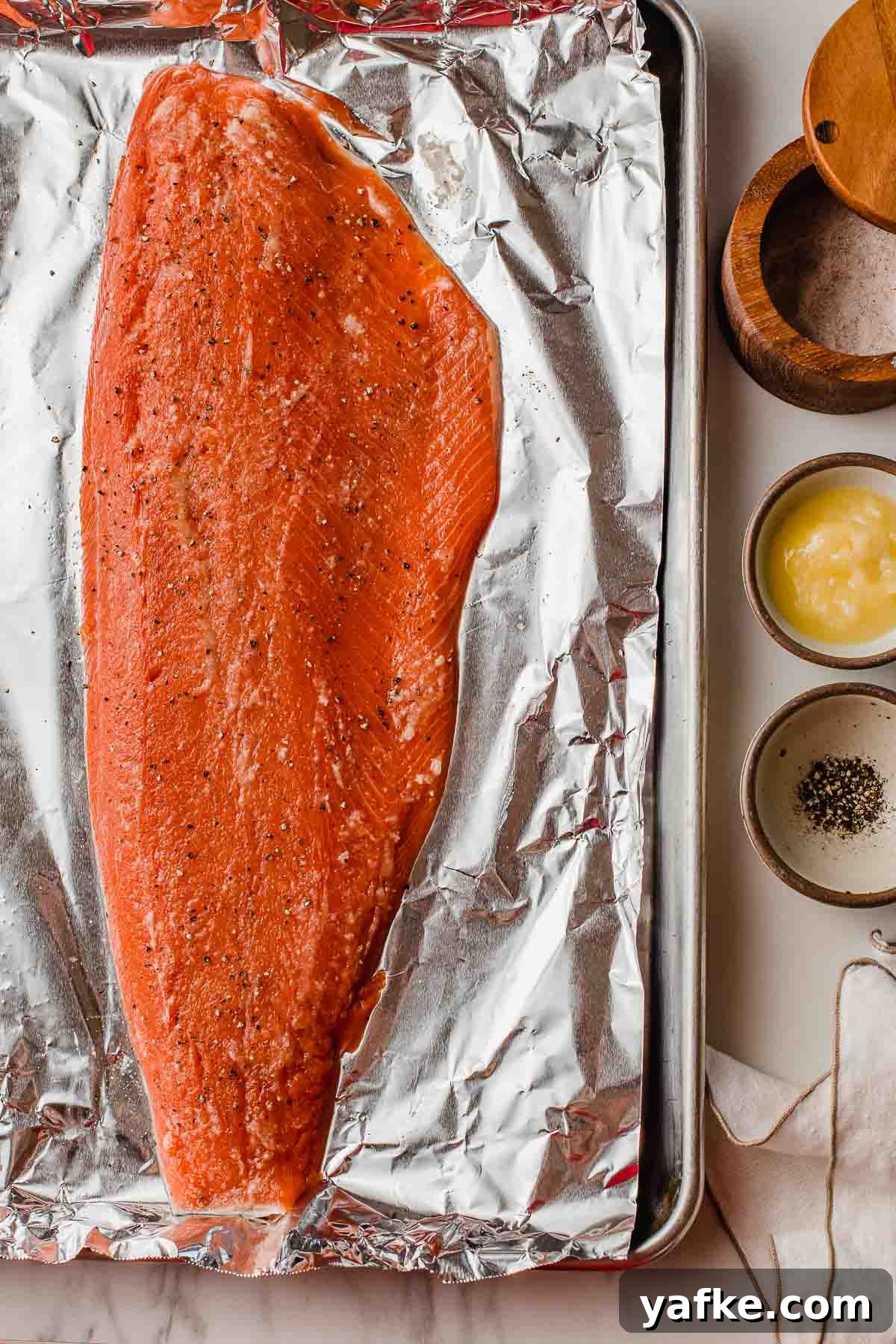
Preheat the oven to 375°F and line a baking sheet with foil. Place the salmon, skin side down, on the foil. Brush the flesh with ghee or oil and season with salt and pepper. Fold the foil sides up around the fish to trap the steam and keep the filet moist during baking.
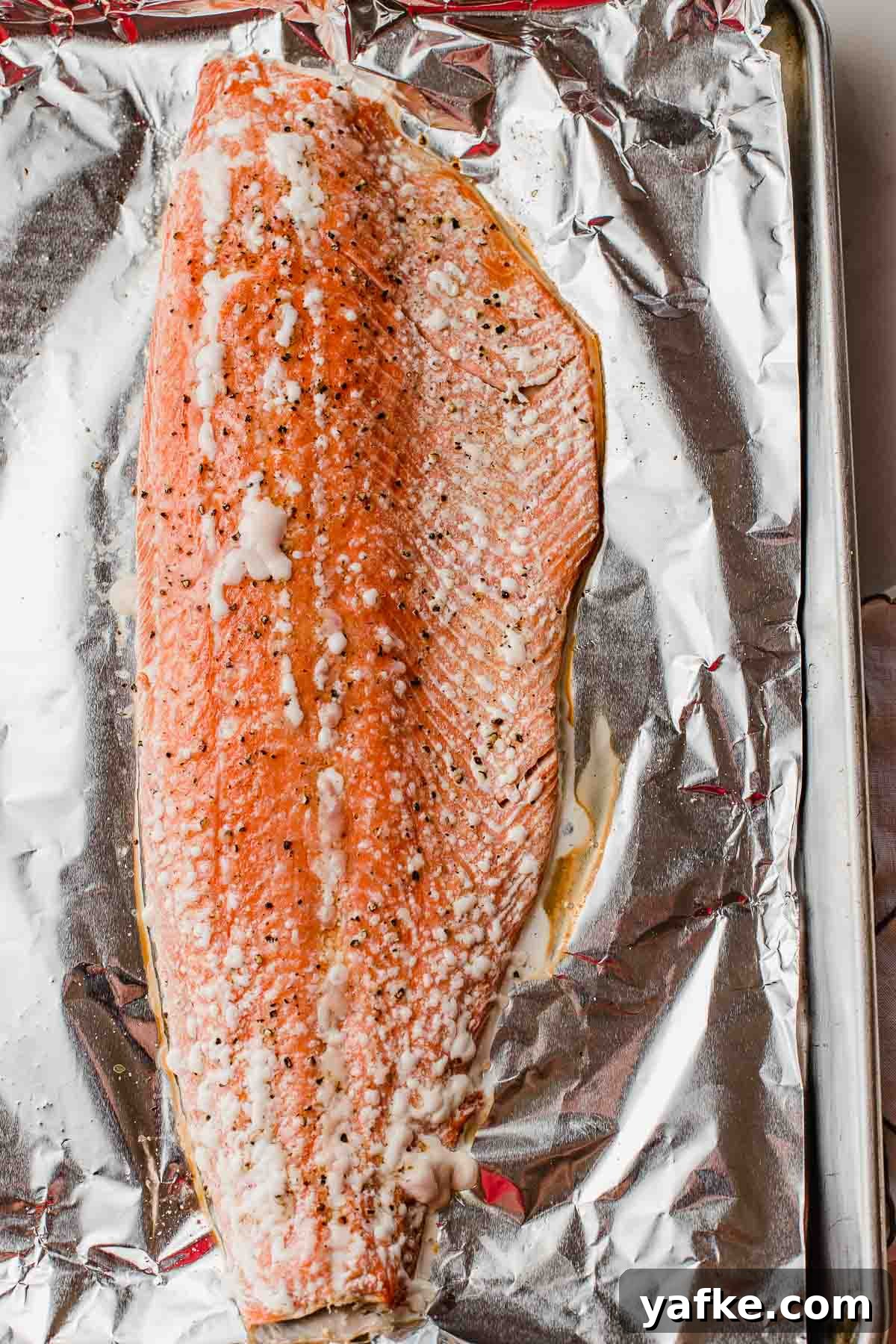
Bake the salmon about 10 minutes, or use the guideline of 5 minutes per ½” of thickness measured at the thickest part of the filet. Once removed from the oven, let it rest for a minute—the carryover heat will finish cooking the center. Serve immediately for the best texture and flavor.
Tips for success
Bring to room temperature: Remove salmon from the refrigerator 30–60 minutes before baking to help it cook evenly from edge to center.
Don’t overbake: Aim to take the fish out a minute or two before it looks fully done. Use the timing rule—about 4–5 minutes per ½” thickness—and remember the fish will continue to cook slightly after being removed from the oven. Overcooked salmon will be dry and lose flavor.
Use ghee or oil: Ghee provides a rich, buttery taste, but olive oil or avocado oil work well if you prefer a lighter flavor.
Skin on or off: Bake with the skin on for easier handling and to preserve moisture. If you don’t want to eat the skin, it lifts away easily after baking: slide a spatula between the flesh and the skin to separate them.
Frequently asked questions
Bake salmon at 375°F. This temperature works well whether you bake the fish covered or uncovered and produces even, dependable results.
Timing depends on thickness. A good rule is 4–5 minutes per ½ inch of thickness, measured at the thickest part of the fillet. Wild sockeye tends to be thinner, while farm-raised or Atlantic fillets are often thicker and need a bit more time.
Gently press the top of the fish with a fork—cooked salmon will flake easily. For an exact check, use a digital thermometer: the USDA recommends an internal temperature of 145°F. Many cooks prefer to remove salmon a few degrees earlier for a moister result and allow carryover cooking to finish it.
Store cooked salmon in the refrigerator for up to 2 days in an airtight container. It can be frozen for up to 2 months; thaw in the refrigerator before reheating or using in recipes.
Leftover baked salmon is versatile and tasty cold. Use it to make salmon patties, a salmon avocado salad, pasta, or toss flakes into grain bowls and sandwiches.

Easy Baked Salmon
Amy Duska
5 mins
10 mins
15 mins
Dinner
American
4
195 kcal
Ingredients
- 1 lb. wild-caught salmon
- 1 tablespoon ghee (or olive oil)
- ½ teaspoon salt
- ½ teaspoon black pepper
Instructions
- Preheat the oven to 375°F and line a baking sheet with foil or parchment.
- Place the salmon skin-side down on the foil. Brush the flesh with ghee or oil, then season evenly with salt and pepper. Fold the foil up and around the fish to form a sealed packet.
- Bake for about 10 minutes, or use the timing guideline of 5 minutes per ½” thickness measured at the thickest part of the filet. Remove from the oven and serve immediately.
baked salmon