
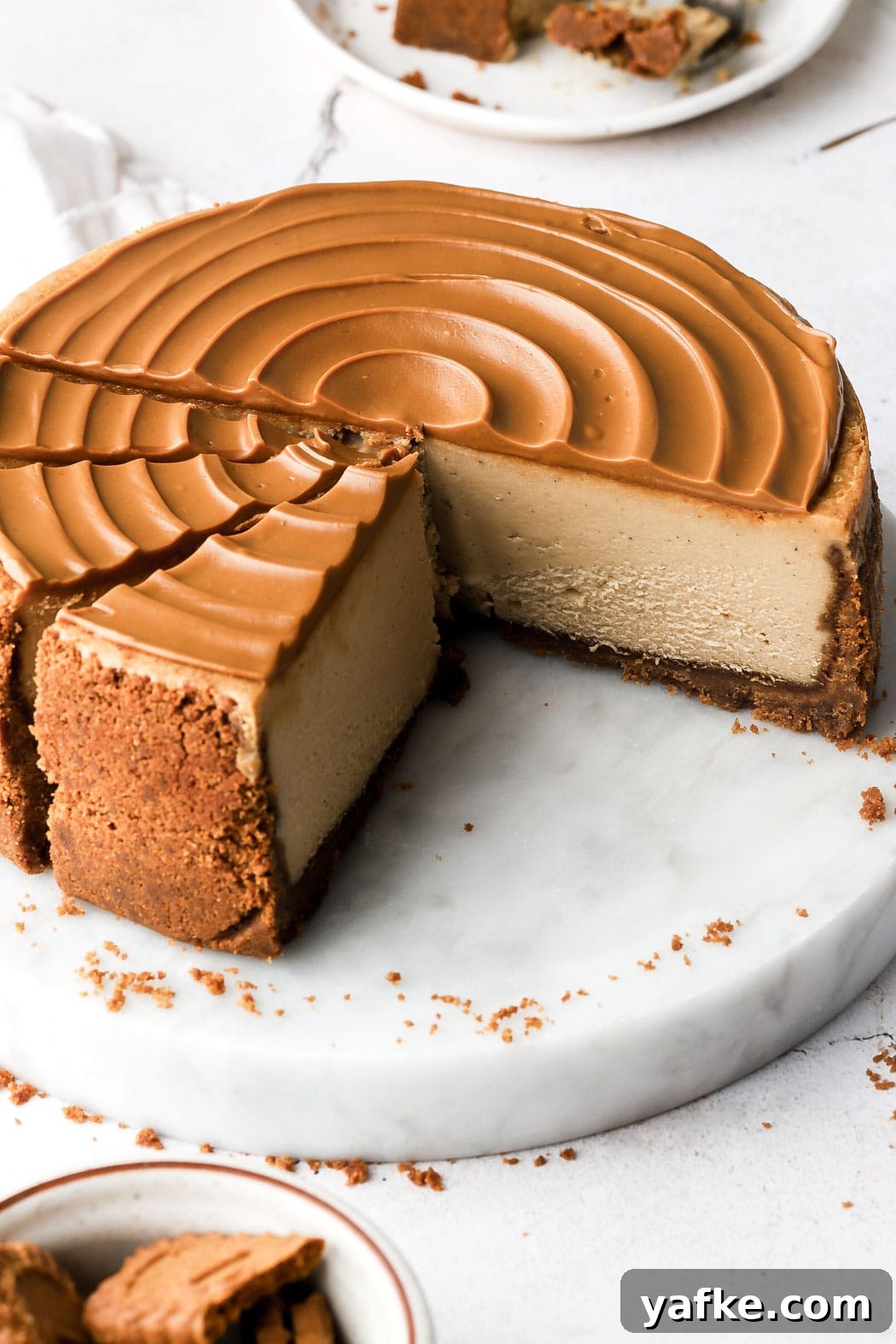
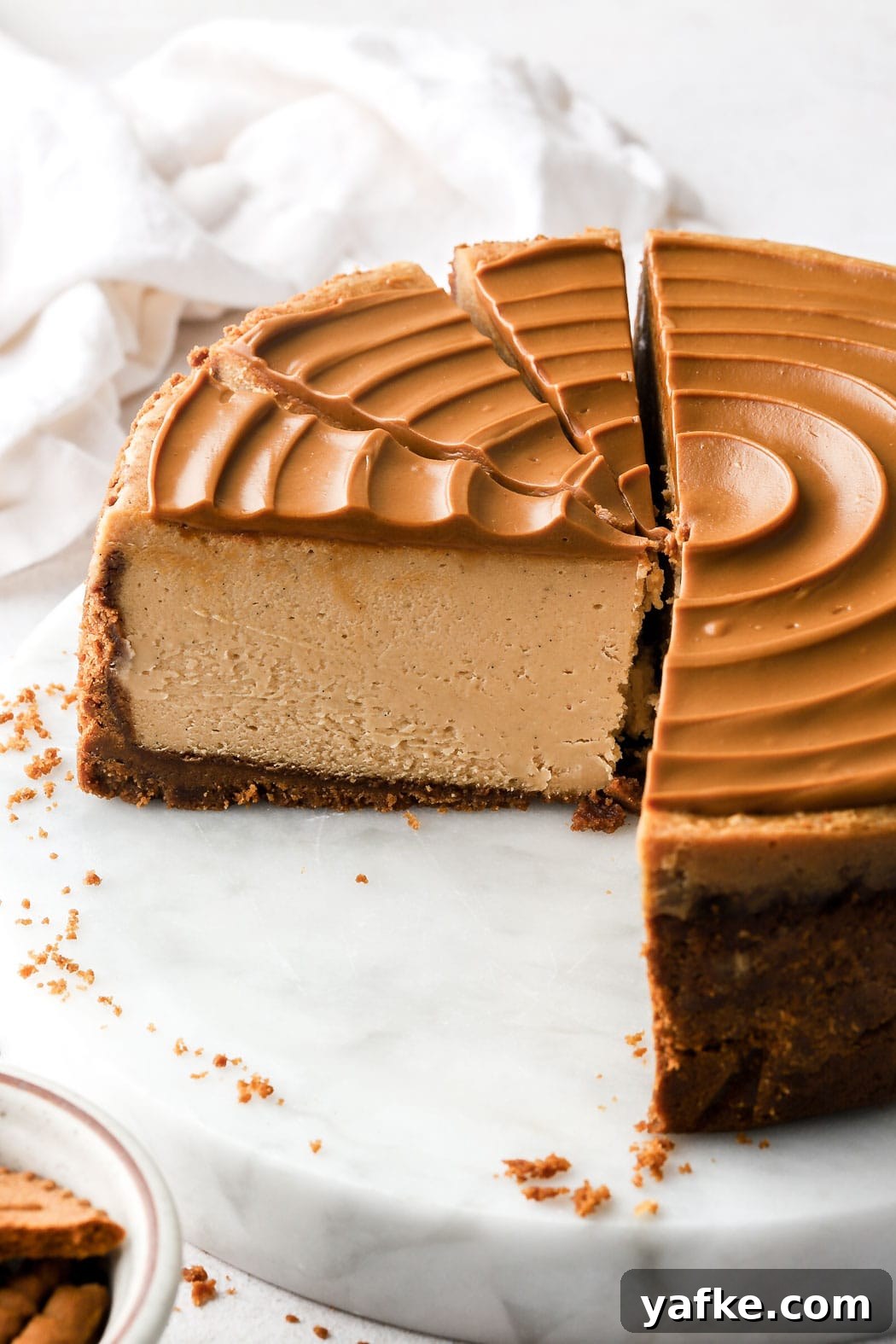
This Lotus Biscoff cheesecake is luxuriously smooth and creamy, yet dense and rich. Lotus Biscoff cookies form the crisp crust, cookie butter is blended into the filling, and a warm cookie butter swirl finishes the top. The recipe can be scaled to fit different pan sizes.
If you love cookie butter, try my other favorites: Biscoff Layer Cake, Brown Butter Cookie Butter Cake, and Biscoff Brownies.
Step-by-Step Instructions with Photos
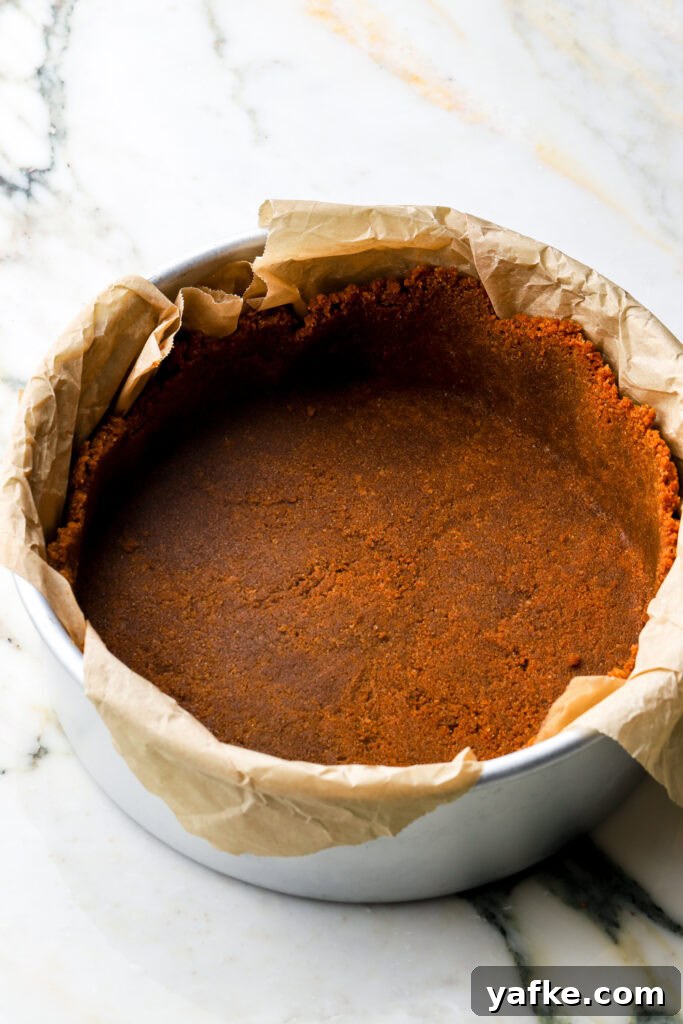
- Prepare the pan: If using a springform pan, remove the side, lay a sheet of parchment on the bottom leaving an overhang, then reattach the side so the paper is secured. Lightly spray the sides with baking spray.
- Make the crust: Pulse Lotus Biscoff cookies in a food processor until they become fine crumbs. Add brown sugar and melted butter and pulse until evenly combined. Press the crumbs into the prepared pan, bringing them up the sides. Use a ½‑cup measuring cup to smooth the bottom and sharpen the corners.
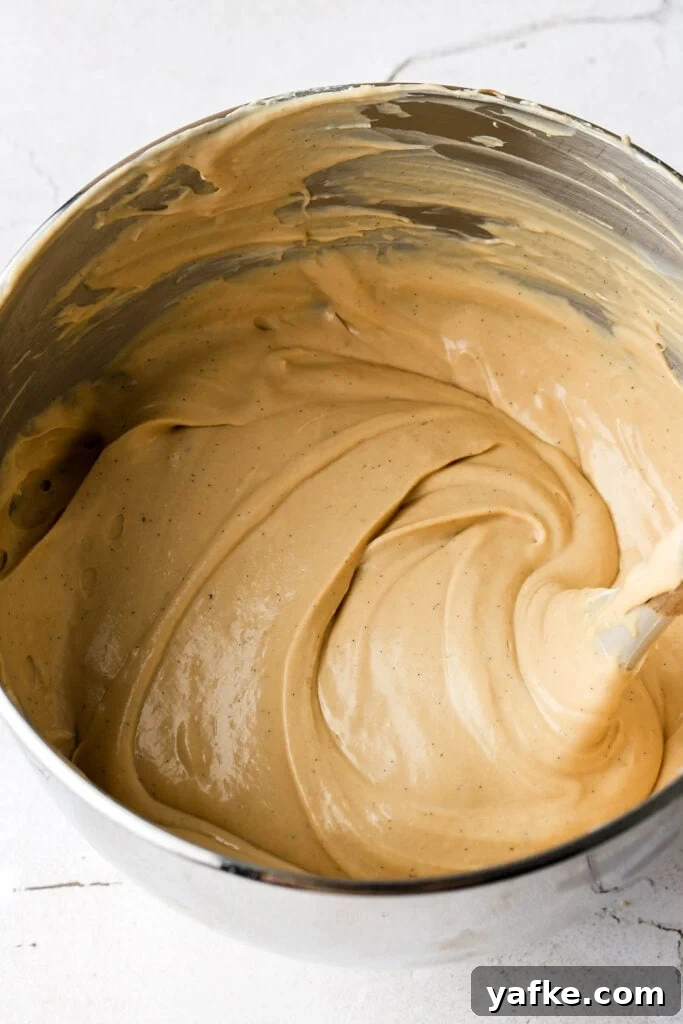
- Make the filling: Cream room temperature cream cheese with the brown sugar until smooth and glossy—no lumps. Add sour cream, cookie butter and vanilla, mixing until combined. Add eggs one at a time on low speed, mixing only until each egg is incorporated. Scrape the bowl and mix briefly to ensure a smooth batter without adding air.
- Bake: Pour the batter over the crust. Bake in a conventional oven set to 300°F (148°C) for about 60 minutes, until the edges are set but the center still has a gentle jiggle. Turn the oven off, slightly open the door and run a knife between the cake and the pan to release it. Let the cheesecake rest in the warm oven for 20–25 minutes.
- Cool and chill: Let the cheesecake cool to room temperature on the counter, then chill in the refrigerator for at least 6 hours or overnight so it fully sets.
- Add the topping: Gently warm additional cookie butter until pourable and spread it over the chilled cheesecake. Use the back of a spoon to create an attractive swirl.
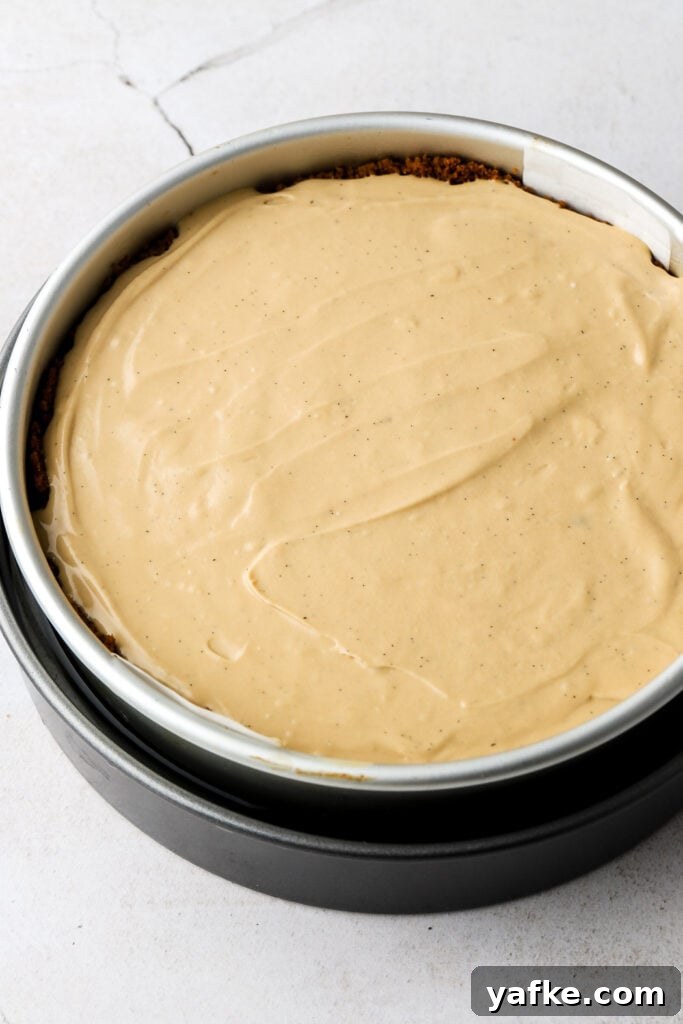
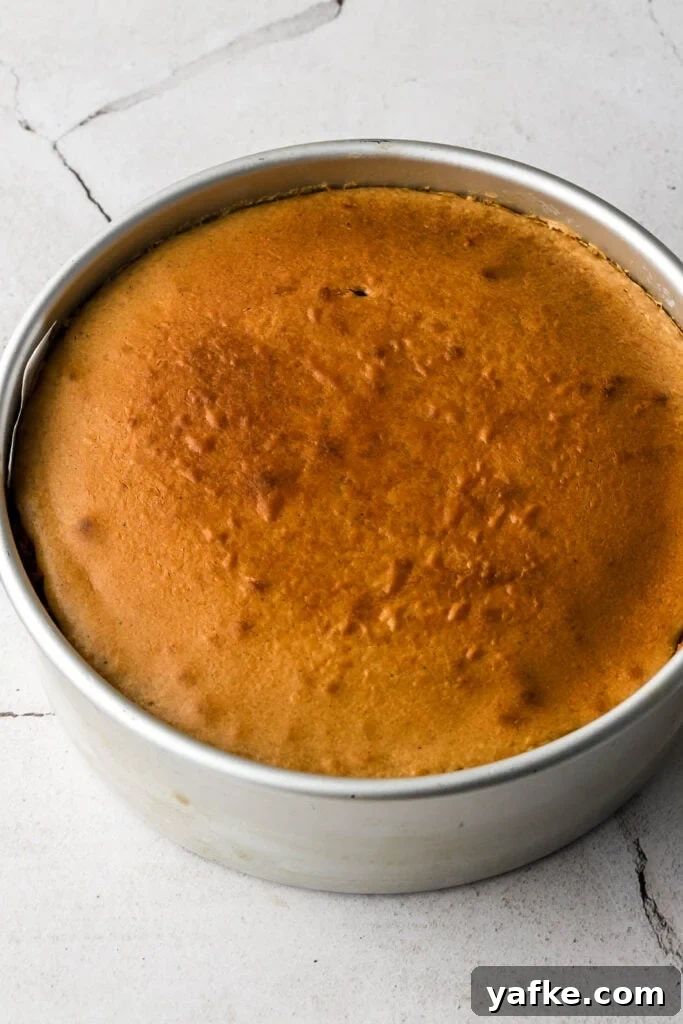
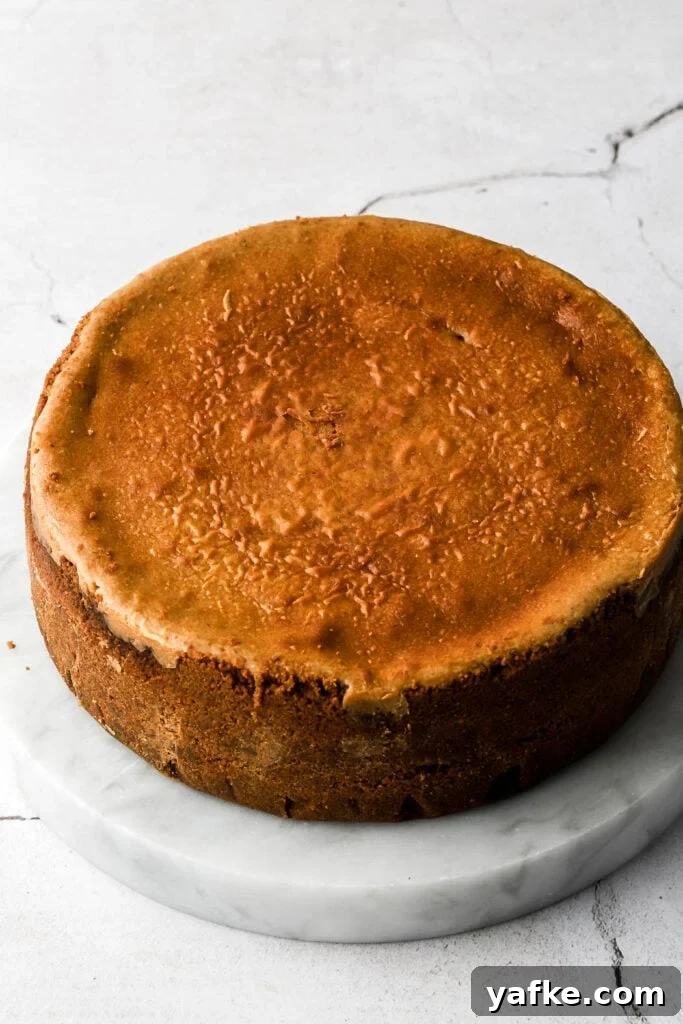
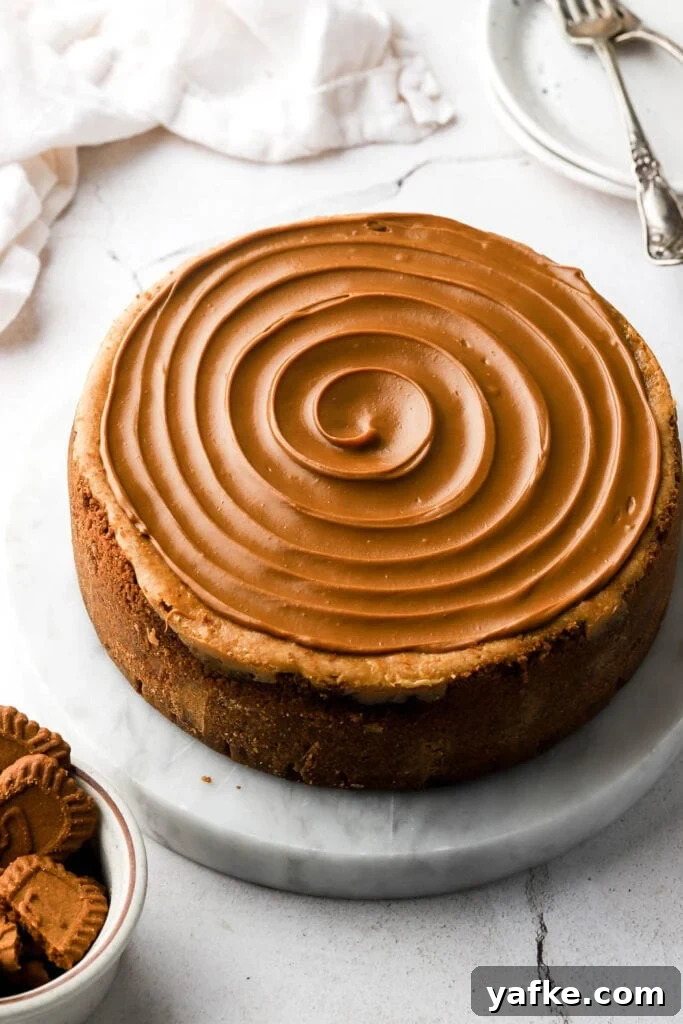
Tips for a Perfect Bake (No Water Bath Required)
- Weigh ingredients when possible for consistent results.
- Bake at a lower temperature for a longer time. Remove when edges are set and the center still wobbles slightly.
- Run a knife around the edge of the cake after turning the oven off to prevent cracking as it cools.
- Allow the cheesecake to cool slowly in the oven with the door ajar for about 20–25 minutes.
- Chill the cheesecake in the refrigerator for at least 6 hours, preferably overnight, to let it fully set.
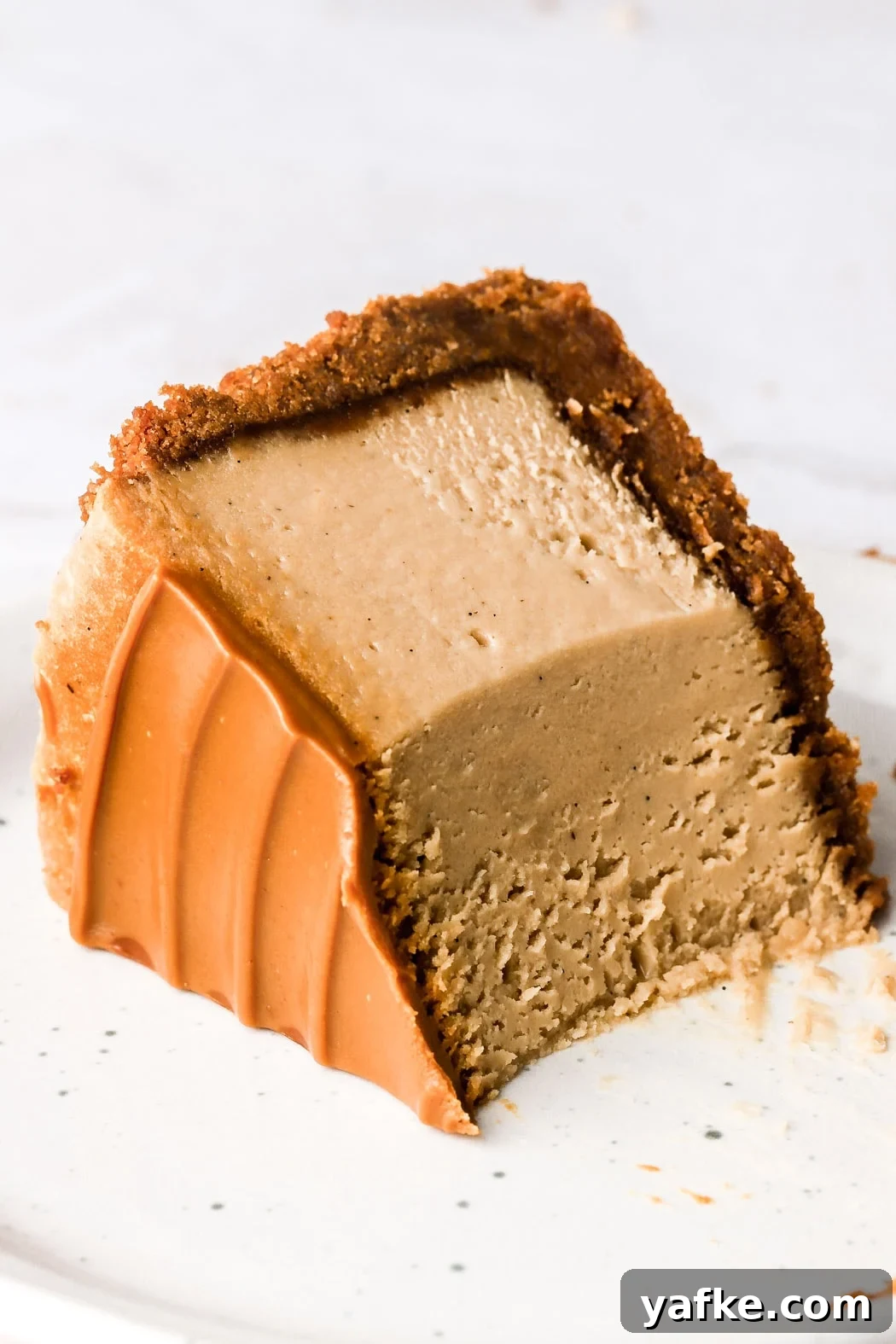
How to Bake This Cheesecake in Different Pan Sizes
This base cheesecake can be scaled to suit different pan sizes and heights. The standard recipes below list the amount of cream cheese to use; adjust other ingredients proportionally based on the ratio you choose and how tall you want the finished cake to be.
- 10‑inch pan: 4 bricks of cream cheese — bake ~65 minutes; rest in oven 25 minutes.
- 9‑inch pan: 3 bricks for a shorter cake, 4 bricks for a taller cake — bake 55–70 minutes; rest 20 minutes.
- 8‑inch pan: 2 bricks for a standard height, 3 bricks for a taller cake — bake 45–60 minutes; rest 15 minutes.
- 6‑inch pan: 1 brick of cream cheese — bake ~30 minutes; rest 15 minutes.
Adjust baking times as needed based on your oven and the thickness of the cake. If you have questions about scaling, leave a comment below.
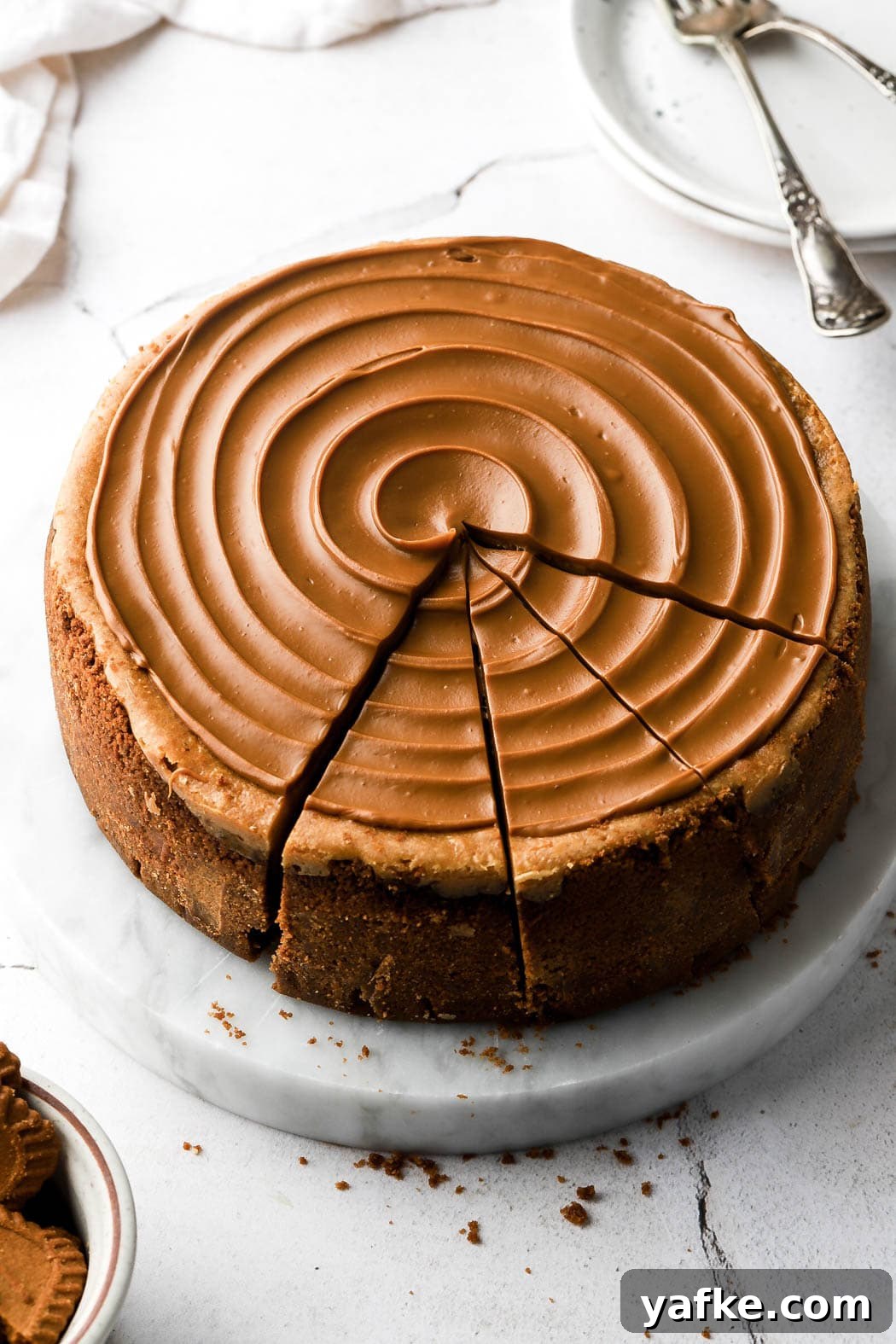
How to Store Cheesecake
To refrigerate: Cover the cheesecake with foil or plastic wrap and refrigerate up to one week. Serve cold or let it sit at room temperature 1–2 hours before serving if you prefer a softer texture.
To freeze a whole cheesecake: Wrap it tightly in plastic wrap, then in aluminum foil, or place in a large airtight container. Thaw in the refrigerator overnight before serving.
To freeze slices: Place slices in a single layer in an airtight container, squeeze out excess air, and freeze. Thaw at room temperature for a few hours or in the refrigerator overnight.
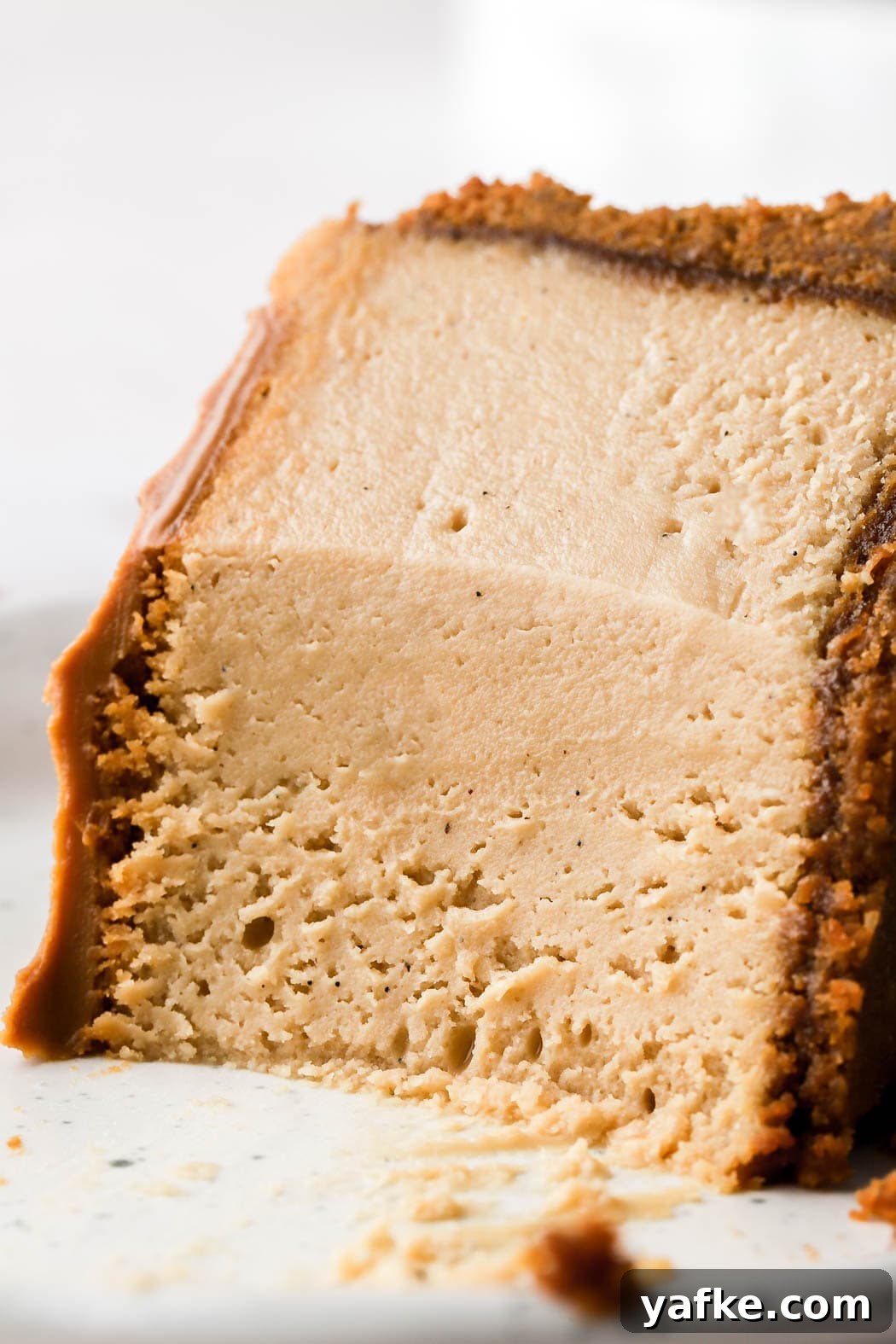
Thanks for reading. If you make this Lotus Biscoff cheesecake, please leave a rating and a comment sharing how it turned out — I love hearing your feedback.
Happy baking!
Love, B
Cheesecake
Lotus Biscoff Cheesecake Recipe
Equipment
- 1 stand mixer with paddle or whisk attachment (or a hand mixer and a large bowl)
Ingredients
Biscoff Crust
- 250 grams Lotus Biscoff cookies
- 25 grams light or dark brown sugar
- 113 grams salted butter, melted
Cheesecake Filling
- 681 grams cream cheese, softened
- 200 grams light or dark brown sugar, lightly packed
- 170 grams sour cream, room temperature
- 240 grams Biscoff cookie butter spread
- 1 tablespoon pure vanilla extract
- 1/4 teaspoon fine sea salt
- 3 large eggs, room temperature
Topping
- 120 grams Biscoff cookie butter spread, warmed slightly
Method
Biscoff Crust
- Preheat the oven to 350°F (180°C). Grease and line an 8‑inch pan with parchment and spray.
- Process the cookies to fine crumbs. Add sugar and melted butter and pulse until combined.
- Press crumbs into the pan, up the sides. Bake the crust for 5–10 minutes while you make the filling.
Cheesecake Filling
- Make sure all dairy and eggs are at room temperature for a smooth batter.
- Beat the cream cheese with the sugar on low speed until smooth, scraping the bowl as needed.
- Add sour cream, cookie butter, vanilla and salt and mix until fully combined.
- With the mixer on low, add eggs one at a time, mixing only until incorporated. Scrape the bowl and finish with a few gentle folds to ensure uniform texture.
- Reduce oven to 300°F (148°C). Pour batter over the crust and bake about 60 minutes until edges are set and center jiggles slightly.
- Turn off oven. Slightly open the door and run a knife around the cake to release it from the pan. Leave the cheesecake in the warm oven with the door ajar for 20–25 minutes, then cool to room temperature.
- Chill in the refrigerator for at least 6 hours or overnight before adding the topping.
Biscoff Topping
- Warm the cookie butter for 5–10 seconds until pourable.
- Pour over the chilled cheesecake and spread with an offset spatula or spoon.
- Use the back of a spoon to create a swirl, then refrigerate for another 4–6 hours before serving.
Notes
If using a springform pan, remove the side to place the parchment on the bottom, leave an overhang, then reattach the side. For a regular cake pan, line with a parchment sheet leaving an overhang so you can lift the cheesecake out easily.
- 6‑inch cheesecake: make 1/3 of the recipe; bake ~30 minutes, rest 10–15 minutes.
- Shorter 8‑inch cheesecake: reduce recipe by 1/3; bake 40–45 minutes, rest 15 minutes.
- 9‑inch cheesecake (standard): use the same recipe; bake 50–55 minutes, rest 20 minutes.
- Tall 9‑inch cake: increase recipe by 25%; bake 70–75 minutes, rest 20 minutes.
- Slightly shorter 10‑inch cake: increase recipe by 25%; bake 60–65 minutes, rest 20 minutes.