
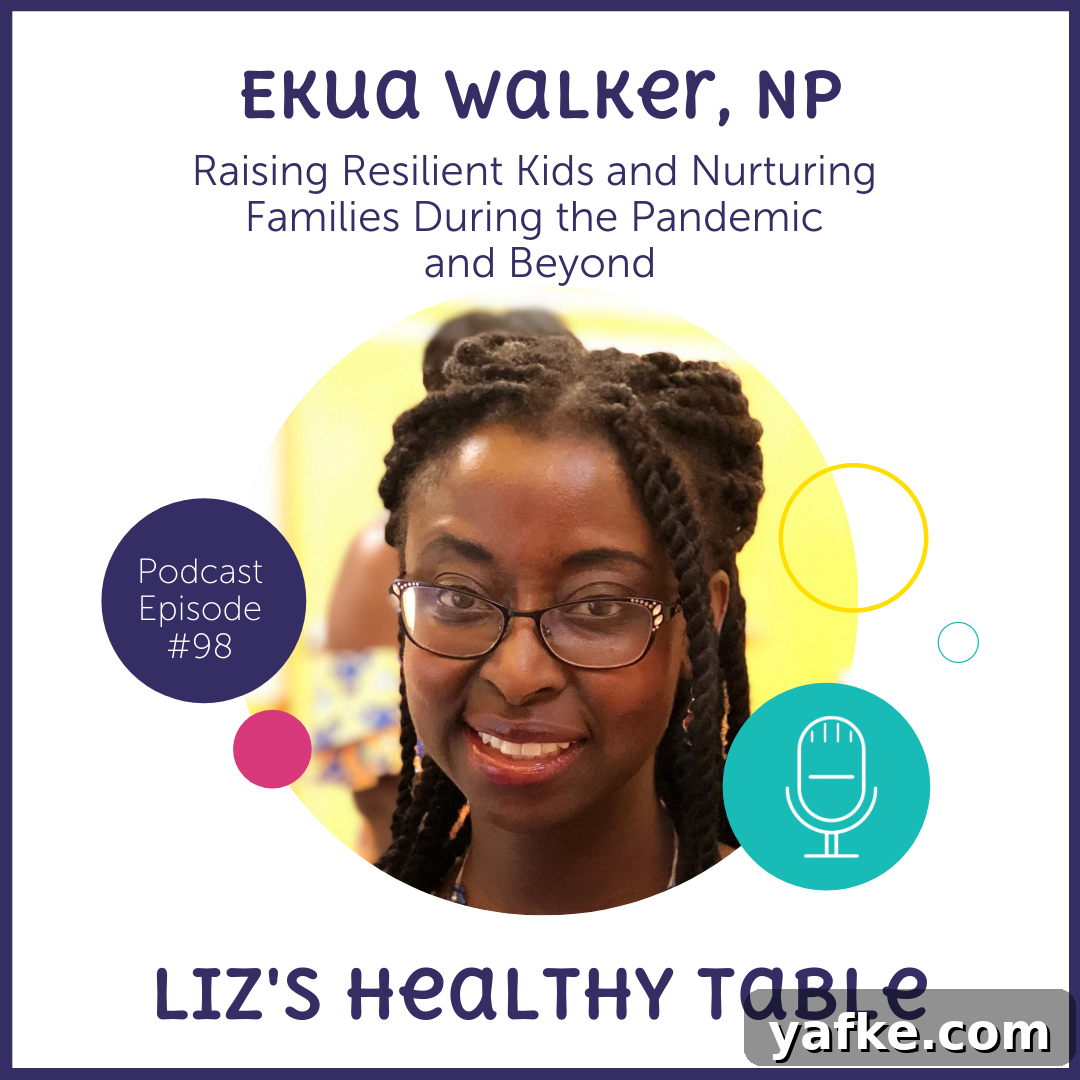
This week on Liz’s Healthy Table we focus on raising resilient children and supporting families through the pandemic and beyond. With practical strategies—reliable mealtime routines, nourishing foods, and simple behavioral tools—today’s episode with Ekua Walker, NP, offers actionable ways to help children stay grounded, reduce anxiety, and regain social and emotional skills disrupted by recent events.
Enjoying the LHT podcast?
Subscribe on Apple Podcasts and post a review
Subscribe on Stitcher and post a review
Ekua Walker, NP, is a pediatric and child development nurse and CEO (chief encouragement officer) based in the San Francisco Bay Area. She works with families of young children and teens who face a range of developmental and learning challenges, including ADHD and communication delays. Board-certified in primary care pediatrics, Ekua also hosts the Moms Changing the World podcast where she shares encouragement, tools, and inspiration for caregivers raising confident, capable children.
“We learned how much we took for granted when the pandemic brought its disruptions to our lives.”
– Ekua Walker, NP
In this episode Ekua and Liz discuss how predictable routines, focused family time, and healthy eating can support emotional regulation, attention, and social skills. They also cover practical steps parents and caregivers can take to reduce household stress, re-establish sleep, and model calm behavior when children feel overwhelmed.
Key takeaways:
- Routines matter. Regular mealtimes, consistent bedtimes, and predictable daily rhythms give children a sense of safety and stability.
- Nutrition supports mental health. Balanced meals that include whole foods, protein, fruits and vegetables help mood and concentration.
- Parent presence is powerful. Children benefit most when caregivers are emotionally available—listening, observing, and offering calm support rather than immediately jumping to fix problems.
- Single-tasking improves focus. Reducing multi-tasking at home—especially during homework and mealtimes—helps children and adults concentrate better.
- Downtime is essential. Rest and unstructured play support cognitive development and emotional regulation for both kids and parents.
- Social skills recover with practice. After periods of isolation, children benefit from guided social experiences like shared meals, cooperative play, and cooking together.
- Sleep hygiene matters. Managing light exposure, limiting screens before bed, and encouraging natural melatonin–boosting habits improve sleep and daytime attention.
- Cooking together is a learning opportunity. Involving children in meal preparation builds practical skills, promotes healthy eating, and creates meaningful family interaction.
- Anxiety is common and treatable. Mindfulness, naming feelings, breathing exercises, and consistent routines help reduce anxiety; supportive foods and good sleep also play roles.
Ekua speaks from personal and professional experience: she is a mother of two girls and works in a busy specialty pediatric practice where she partners closely with families. Her Ghanaian immigrant background informs her family meals and cooking traditions, blending cultural flavors with nutrition-focused choices that children enjoy.
Resources and ways to connect
Learn more about Ekua and her work:
- Website: Moms Changing the World
- Podcast: Moms Changing the World Podcast
- Facebook Group: Moms Changing the World FB Group
Connect with Liz Weiss
- Author of the Color, Cook, Eat! coloring book series
- Website: Liz’s Healthy Table
- Podcast: Liz’s Healthy Table podcast
- Blog: Liz’s Healthy Table blog
- Facebook community: Liz’s Podcast Posse—stop by and ask to join
If you have a question about the episode or a suggestion for a future show, please leave a comment below or join the Podcast Posse Facebook group. For more episodes that explore food, family, and wellbeing, check the show archives where past guests share recipes, strategies for healthy eating, and tips for family nutrition and resilience.